

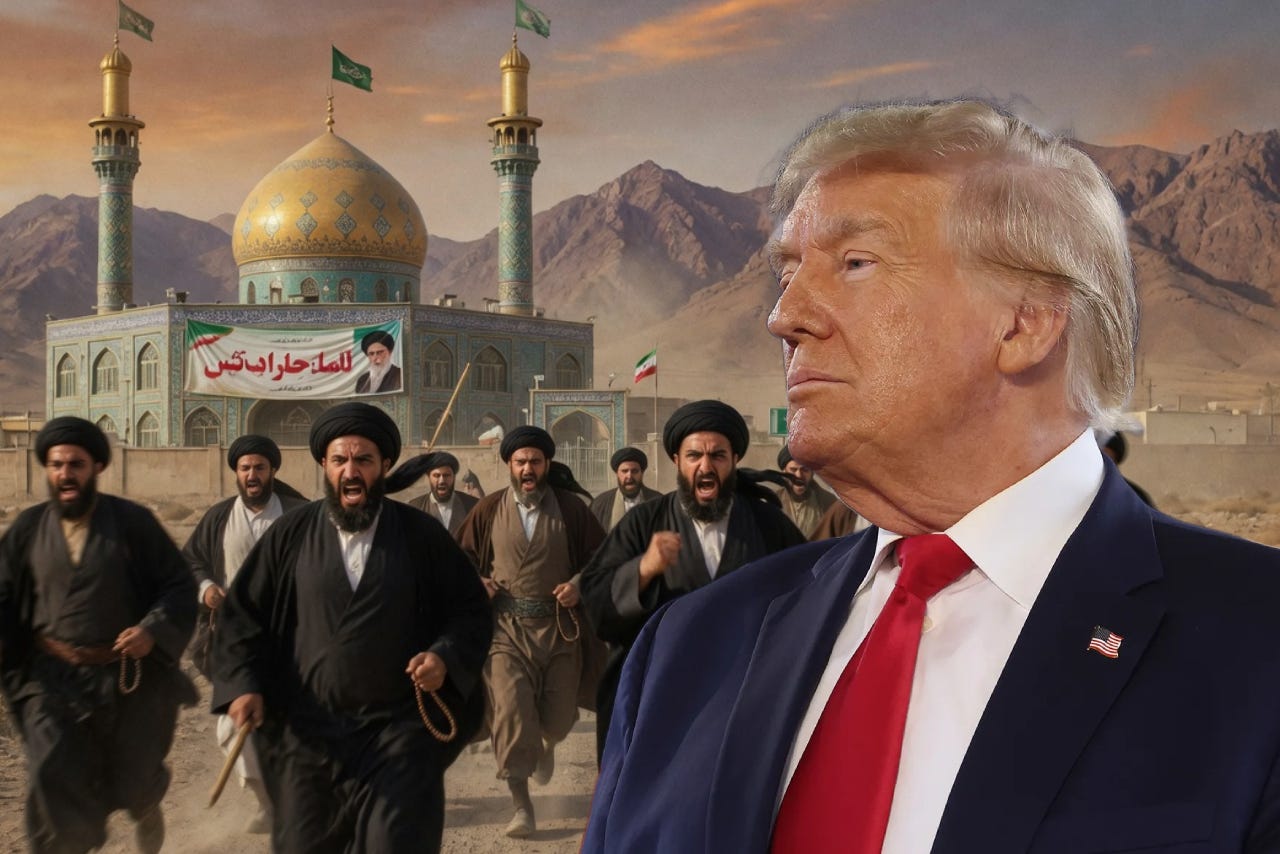
In the dynamic world of conservative politics, our greatest strength lies in ideological unity, grounded not in blind conformity but in a shared commitment to America’s security, prosperity, and the enduring principles of liberty. President Trump exemplifies this as one of the most transformative leaders of our time. He has facilitated historic peace deals in the Middle East, taken a firm stance against China, secured our borders, and prioritized America’s interests like no one else.
That said, good Republicans, steadfast conservatives, and devoted MAGA supporters can disagree with aspects of the President’s approach to negotiating with the Iranian regime without diminishing their admiration for him or their support for his broader agenda.
Disagreeing with Mr. Trump’s approach to the Iranian mullahs doesn’t mean one is anti-Trump. It doesn’t indicate disloyalty or a rejection of his impressive record. President Trump has consistently shown his willingness to pursue bold and unconventional strategies that challenge traditional Washington thinking. His “maximum pressure” campaign during his first term significantly weakened the Iranian economy and deterred aggression in ways that previous administrations could only dream of. His supporters recognize this.
Yet many principled voices within the movement—including legal scholar Mark Levin, historian Victor Davis Hanson, and numerous knowledgeable, everyday conservatives—argue that achieving genuine, lasting peace in the Middle East requires decisively and unequivocally ending the mullahs’ tyrannical reign. This viewpoint isn’t driven by opposition to Trump but rather by a clear-eyed assessment of the regime’s nature: a theocratic dictatorship that exports terrorism, brutalizes and slaughters its own citizens, routinely breaks agreements, and seeks nuclear weapons to dominate the region and threaten Israel and the West.
The Iranian regime has repeatedly shown that it views negotiations as opportunities for a temporary ceasefire (hudna), which allows them to delay progress, rearm, continue uranium enrichment, and maintain their terror-based subversion. Billions in sanctions relief from previous deals have funded proxies like Hezbollah and Hamas, further destabilizing the region and promoting Islamofascism and its destructive agenda. For genuine peace—building on the Abraham Accords and other breakthroughs from the Trump administration, the influence of this regime must be eradicated.
This belief aligns with a core conservative understanding of evil: it cannot be appeased indefinitely; it must be confronted and defeated. Many who hold this view have fervently supported Trump in 2016, 2020, and 2024, and they continue to back his efforts to restore American greatness. Differing opinions on the strategy towards Iran reflect intellectual honesty rather than betrayal.
Some reports indicate that some of Trump’s advisors are recommending more rapid action or compromises ahead of the midterm elections. However, Mr. Trump seems to be staying firm, prioritizing America’s strategic interests over short-term appearances. This determination deserves our appreciation and a degree of trust in his renowned “art of the deal.”
Trump has demonstrated a unique mastery of timing, leverage, and psychological insight that few politicians can match. His instincts have consistently proven to be more effective than the conventional wisdom of the foreign policy establishment. Those familiar with his career know that he often perceives opportunities that others overlook. While patience can be frustrating during tense situations, trusting his calculated approach has previously served the country well.

That said, serious and legitimate questions linger regarding any strategy that considers the long-term survival of the mullahs’ regime in a meaningful way. A regime that stones women, hangs dissidents, and mercilessly slaughters its own people by the tens of thousands for daring to seek freedom cannot be a stable partner for peace. Allowing such a regime to continue risks empowering a nuclear-capable state that threatens global energy security and endangers allies like Israel and Saudi Arabia.
However, as I posited in a recent article, the path forward must be wise.
Engaging regional powers, particularly Sunni Arab states that are already aligning against Tehran through the Abraham Accords, to take a leading role in containing or ultimately ending the regime’s despotic rule has significant advantages. This strategy avoids providing the mullahs with a martyrdom narrative about “the West attacking Islam,” which could unite surviving fragmented groups into even more dangerous terrorist networks. Additionally, it acknowledges the cultural and religious dynamics involved while prioritizing American interests by refraining from committing U.S. forces to another ground war in the Middle East.
We should trust that President Trump and his team—who have been tested against relentless opposition from Democrats and the Deep State—have considered these complexities. The same strategic minds that outmaneuvered Marxist strategists, exposed media bias, and reshaped global trade surely weigh the risks of Iran’s survival against the benefits of regional realignment. So, it’s important to remember: we conservatives take pride in strategic thinking, not emotional reactivity.
As the world observes these negotiations, it’s important to keep in mind a key truth: we do not have access to every detail, backchannel communication, or intelligence assessment shared with the President and his team. Diplomacy often demands discretion. What may seem like a public concession could be part of a larger strategy aimed at further isolating Iran or triggering an internal collapse.
History shows that Trump is skilled at such maneuvers. Jumping to conclusions based on partial information and narratives promoted by mainstream media risks undermining our own position.
It is not only acceptable but also healthy for conservatives to have differing views on processes and to passionately advocate for their preferred outcomes. Engaging in debate strengthens our community. We assess threats, consider options, and improve strategies through open discussion. This approach is in sharp contrast to the Left, where dissent often leads to purges, cancel culture, and internal conflicts.
Democrats struggle under pressure; conservatives deliberate and unite around core principles. We are not Democrats. Our movement thrives because it encourages serious policy discussions while remaining loyal to leaders who deliver results.
President Trump has gained significant goodwill through his strategies, accomplishments, and unwavering America First vision. Those who voice concerns about Iran policy aren’t fracturing from the counter-revolutionary movement back toward the Constitution. We do so with shared goals in mind: creating a safer world, strengthening America, and defeating radical Islamic terrorism.
As these negotiations progress, let us prioritize unity, extend grace when our approaches differ, and focus on the larger picture. The mullahs’ regime is one of the significant threats of our time. Finding the best way to eliminate this threat is a valuable topic for discussion among friends and allies. In this discussion, we honor the movement Trump has created by engaging thoughtfully, just as he tackles the world’s most challenging issues: with strategic thought and boldness.
We should avoid reacting impulsively like the uninformed lemmings of the Left. A slow and steady approach on firm ground will yield the best possible outcome.


