

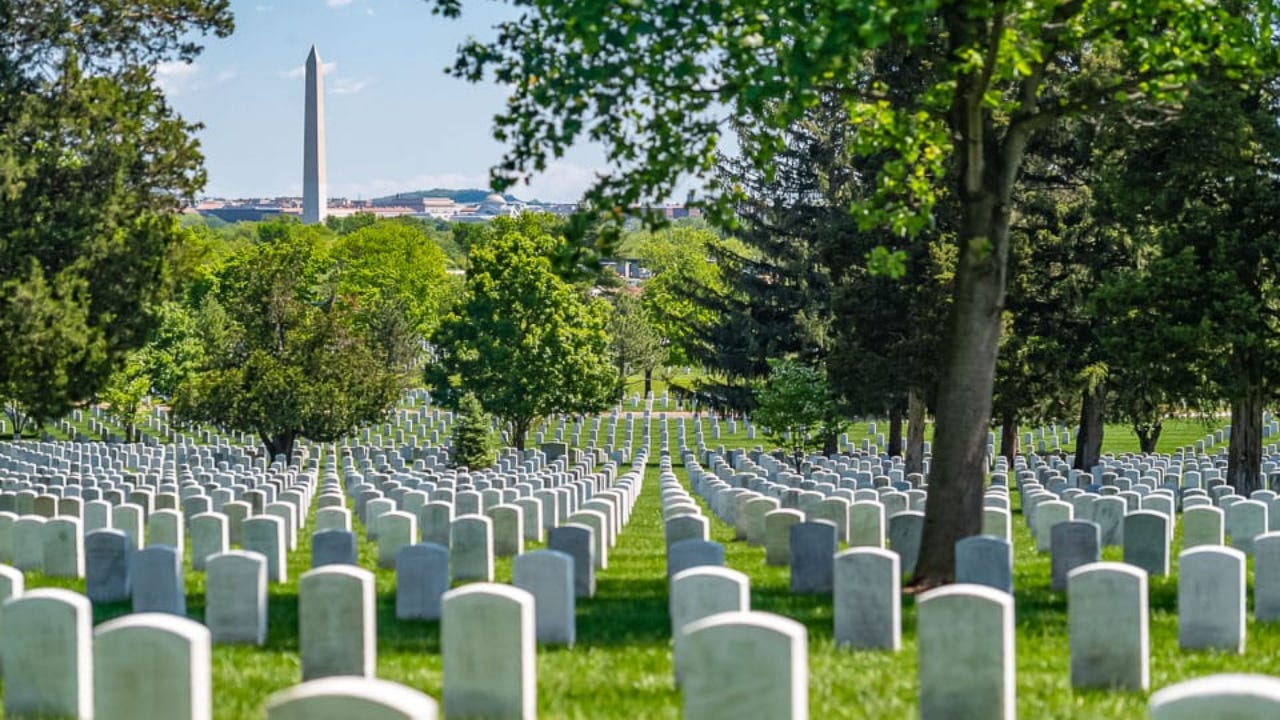
Memorial Day is one of those observances that risks becoming too familiar for its own good. It rolls around each year with the predictable rhythm of the unofficial start of summer—barbecues smoking in backyards, families packing for long weekends at the lake, and travel plans filling highways and airports. Yet its deeper purpose stands in quiet, solemn contrast to the comfort and leisure it has come to accompany.
At its core, Memorial Day is not a celebration of ease or relaxation. It is a day set aside for solemn recognition of profound sacrifice. It calls us to remember the men and women who gave their lives in service to the United States, from the bloodied fields and frozen winters of the Revolutionary War to the distant, complex battlefields of the 21st century. If observed with any seriousness, it should compel a deeper reflection: everything Americans enjoy today—our political liberties, economic prosperity, technological advancements, and even our right to disagree—rests on a foundation built by those who made the ultimate sacrifice.
The American story begins with extraordinary risk. The generation that fought the Revolutionary War did not inherit a stable, secure nation. They wagered everything they had to create one. Farmers, tradesmen, merchants, and ordinary citizens took up arms against the most powerful military empire of their era. Many left behind families and livelihoods, marching into uncertainty. Thousands never returned home.
Their victory achieved more than mere independence from Britain. It established a radical new framework of governance grounded in individual rights, limited government authority, separation of powers, and the rule of law. This framework became the fertile soil in which innovation, enterprise, free expression, and personal ambition could take root and flourish across generations.
Every major conflict that followed tested and, in many cases, reinforced that foundational structure. The Civil War, with its staggering human toll of more than 600,000 dead, preserved the Union and redefined the nation’s commitment to liberty and equality for all its citizens. The World Wars projected American power onto the global stage. In those vast struggles, American sacrifices helped defeat tyrannical ideologies—fascism and militaristic imperialism—that threatened freedom not just at home but around the world.
Later conflicts, including the Cold War standoff, Korea, Vietnam, Iraq, and Afghanistan, carried their own moral complexities, strategic debates, and painful controversies. Yet through all of them runs a common thread: individuals stepping forward, often at great personal risk and against their own instincts for self-preservation, to defend a system and a set of principles larger than themselves.
It is easy to speak of freedom in abstract, comfortable terms. Memorial Day strips that abstraction away. Freedom is not self-sustaining. It is not a natural state that persists without effort. It requires constant vigilance, civic commitment, and, at critical moments, extraordinary personal sacrifice.
Those honored on this day did not simply “serve” for a few years and return to normal life. They surrendered the entirety of their futures. Careers that would never begin, families they would never raise, ambitions and dreams that would remain unfulfilled—all were laid down in the belief that something enduring and valuable would endure in their place. Their final act was an investment in the continued possibility of the American experiment.
What is often overlooked in our modern, fast-paced society is how directly those sacrifices have shaped the world we inhabit today. The United States, despite its many imperfections and ongoing struggles, has served as a central driver of technological and economic progress for well over a century. This progress didn’t emerge in a vacuum of peace and guaranteed stability. It was made possible by a relatively stable political system, protected and preserved through military strength, and underwritten by the willingness of citizens to defend it when threatened.

Consider the technological revolutions that define contemporary life.
The digital age, the internet, modern computing, satellite communications, GPS, and now artificial intelligence did not arise as isolated inventions detached from society’s broader context. They emerged from a culture that values open inquiry, rewards innovation, protects intellectual freedom, and allows creative minds to challenge conventional thinking. Significantly, many of these breakthroughs have roots in military necessity and defense-related research. Early computing systems were accelerated by wartime demands. Satellite technology and GPS were developed through defense initiatives. The same institutions that prepared young people for military service also trained generations of engineers, scientists, and researchers who would later transform civilian life.
Artificial intelligence stands as perhaps the most compelling current example of how far this trajectory has extended. What began as theoretical research in universities and government labs is now woven into the fabric of everyday existence—powering business strategies, enhancing medical diagnostics, streamlining communication, optimizing logistics, and strengthening national security.
Yet even this cutting-edge advancement did not appear suddenly. It grew within a broader ecosystem of stability, rule of law, and intellectual freedom made possible by generations of Americans who secured the nation’s foundations. Without the sacrifices that preserved that system through periods of existential threat, it becomes difficult to imagine such rapid and sustained technological progress taking hold.
This is where Memorial Day demands something more than passive acknowledgment or ritualistic gestures. It asks for intellectual honesty and moral clarity. The conveniences of modern life—smartphones providing instant global communication, advanced healthcare extending lifespans, seamless global commerce, and increasingly sophisticated AI tools that augment human capability—are often taken for granted as natural rights or inevitable outcomes.
But they are not.
They represent the downstream effects of a long, unbroken chain of events, many of which involved profound human cost and deliberate sacrifice. To separate the benefits we enjoy from the sacrifices that enabled them is to misunderstand the nature of both.
At the same time, genuine remembrance should avoid becoming a hollow or empty ritual. There is an important distinction between mere recognition and true reflection. Recognition is relatively easy: a moment of silence during a cookout, a flag raised outside a home, or a ceremony attended. Reflection is more demanding. It requires confronting the reality of loss, acknowledging the weight of what was given, and honestly considering what that loss obligates from those who remain.
If previous generations sacrificed everything to secure a system defined by freedom and opportunity, then the natural question for current generations is what we are willing to do—individually and collectively—to preserve, strengthen, and improve that inheritance.
This obligation does not necessarily require military service, although for some, it always will. It can manifest through serious engagement in civic life, responsible participation in democratic processes, contributions to economic vitality and technological advancement, or simply cultivating a consistent sense of duty toward the institutions that sustain the Republic. Above all, it means resisting the comfortable temptation to take national stability and prosperity for granted. History repeatedly demonstrates how quickly security and freedom can erode when neglected or taken lightly.
Ultimately, Memorial Day is not merely about looking backward with nostalgia or sorrow. It is about understanding the present more clearly and approaching the future with a grounded awareness of what came before. The soldiers, sailors, airmen, and Marines we honor did not fight merely for a static outcome or frozen moment in time. They fought to ensure that the nation could continue to evolve, adapt, innovate, and improve across generations. The technological revolutions unfolding today—including the rapid development of artificial intelligence—form the latest chapter in that long continuum made possible by earlier sacrifice.
The least we can do is remember that vital connection. Not in a fleeting or merely symbolic way, but in a manner that genuinely shapes how we observe this day—and, more importantly, how we choose to live in the days that follow.


Nicely said Frank. Memorial Day will always be a day of remembrance for me, to remind me of the fallen and also of the men and women who have been injured in support of our great country.