

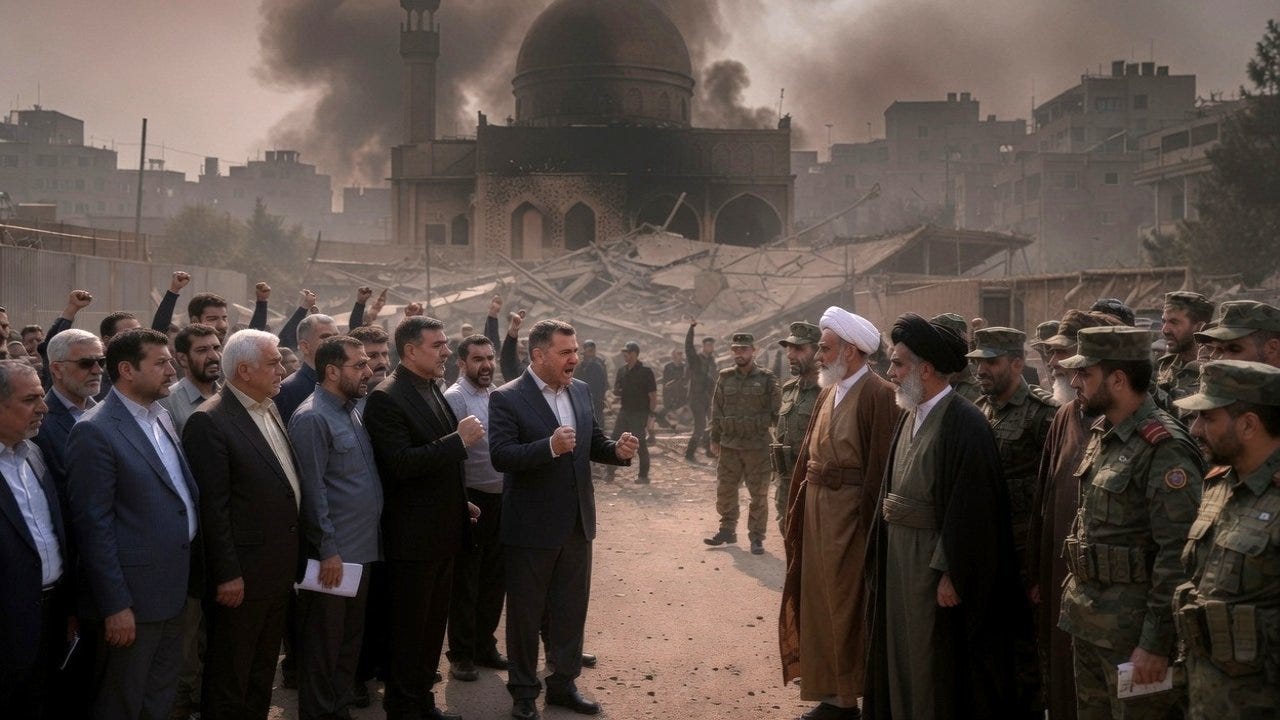
Iran’s so-called elected government under President Masoud Pezeshkian presents an appealing illusion of normalcy. After years of isolation, economic hardship, and ongoing proxy wars, Pezeshkian and his associates exhibit a desperate desire to bring the Islamic Republic back into a state of international respectability—through trade deals, diplomatic engagement, and a cessation of clerical terrorism and the aggressive actions of the Islamic Revolutionary Guard Corps (IRGC), which have transformed Iran into a pariah state. However, this facade of moderation clashes sharply with the entrenched powers of the mullahs and their enforcers in the IRGC. The resulting conflict is not a struggle for the soul of Iran, but rather a brutal turf war among various Islamist factions, where placing trust in any one group poses a significant risk for both the Iranian people and the international community.
At its core, Iran’s political system is based on deception. While the president and parliament appear to be elected, ultimate authority lies with the Supreme Leader and his network of clerics, known as the mullahs, who claim the divine right to oversee every aspect of life under the velayat-e faqih doctrine. These self-appointed guardians of Shia purity have enriched themselves while preaching austerity, suppressed dissent in the name of piety, and exported chaos through terror proxies.
The Islamic Revolutionary Guard Corps (IRGC), initially established as the revolution’s defensive force, has evolved into a parallel deep state—a brutal military-intelligence cartel that controls significant portions of the economy, nuclear sites, and foreign operations, answering exclusively to the Supreme Leader. Together, they have weaponized religion and force to crush any genuine reform.
Pezeshkian’s government represents a quiet rebellion by the elected officials against the suffocating influence of the ruling regime. In the face of sanctions, internal unrest, and the aftermath of recent war, the government has expressed apologies to its Gulf neighbors, advocated for de-escalation, and suggested pragmatic agreements with the West. The underlying message is clear: Iran has the potential to move away from the mullahs’ outdated theocracy and the IRGC’s terrorist legacy in order to rejoin the international community, leading to normal trade relations, reduced regional conflict, and relief for a population suffering from ideological extremism. This desire for change reflects the deep frustration among Iran’s technocrats and moderates—and the overwhelming majority of the Persian people of Iran, who view the clerics and the Revolutionary Guards as impediments that are dragging the country into ongoing conflict and poverty.
The war that began on February 28, 2026, significantly deepened the existing divide within the Iranian leadership. The death of Ali Khamenei during the initial strikes created a power vacuum. His son, Mojtaba Khamenei, was appointed as Supreme Leader with the support of the IRGC. However, the younger Khamenei—who is wounded, reclusive, and lacks his father’s strong authority—has become a weakened figurehead.
In the midst of this chaos, the IRGC has aggressively consolidated its control. They dominate the Supreme National Security Council, have sidelined key figures like Pezeshkian, and have overridden civilian initiatives. Commanders within the Guards, such as Ahmad Vahidi, have publicly criticized the president, blocked diplomatic efforts, and maintained a confrontational stance, including disruptions in the Strait of Hormuz. Elected officials are finding themselves increasingly isolated, with their calls for normalcy being drowned out by the hardline directives of the Guards and the doctrinal rigidity of the mullahs.

This situation has sparked direct factional conflict. Clerical bodies, such as the Assembly of Experts, have issued rare public rebukes of the security council, accusing it of overstepping Mojtaba’s authority in negotiations. The mullahs resent their diminishing theological power as the IRGC transforms Iran into a militarized junta, or juntacracy. Meanwhile, Pezeshkian’s camp watches helplessly as the Guards absorb intelligence functions, install loyalists, and prioritize regime survival through confrontation, rather than embracing the elected government’s vision of pragmatic reintegration. However, even among the “reformers,” there is widespread cynicism: they operate within the same Islamist framework, with their moderation being at best tactical and constrained by a constitution that enshrines clerical supremacy and Guard autonomy.
A thorough examination reveals that the mullahs and the IRGC are the main problems facing Iran. The clerics’ use of taqiyya (deception) and hudna (temporary truces) has always led to the betrayal of international agreements, including the Memorandum of Understanding (MOU), the Nuclear Non-Proliferation Treaty (NPT), and the Joint Comprehensive Plan of Action (JCPOA), all while they continue to fund global terrorism.
Rather than serving as protectors, the IRGC operates more like an economic mafia and a domestic oppressor. They hoard wealth from oil profits and evade sanctions while using Basij thugs to suppress protests. This power struggle highlights the decay within the regime; it’s not a matter of ideological purity but rather a competition for control among self-serving elites who consider the Iranian people expendable.
Pezeshkian’s attempts at fostering normalcy reveal how deeply the clerics and the Guards have corrupted the state. However, they also emphasize the limitations of any “elected” savior trying to operate within this flawed system.
For outsiders, this conflict poses a challenging dilemma. The elected government’s push for normalcy without terror seems appealing, especially amid the fatigue of war. However, history warns us against falling for illusions. Pezeshkian is still a product of the regime and is unable to dismantle the mullahs’ theological grip or the IRGC’s economic empire without risking his own destruction. Strengthening the Guards would merely replace clerical robes with military fatigues, continuing the same anti-Western aggression, but with a more aggressive facade. Trusting either side is a fool’s errand; both factions uphold the Islamic Republic’s fundamental injustices, differing only in their tactics for maintaining power.
Iran’s internal conflict is a symptom of systemic failure. The aspirations of elected reformers for reintegration clash violently with the mullah-IRGC axis of tyranny, but neither approach leads to genuine liberation. The clerics offer a vision of medieval stagnation and exported jihad, while the Revolutionary Guards provide a system of militarized kleptocracy. Pezeshkian’s faction gestures towards a less toxic future, yet remains entangled in this complex web.
For true peace and prosperity, Iran requires more than just a factional victory; it needs a decisive dismantling of this entire corrupt structure. Until that happens, both the Iranian people and global stability will continue to suffer the consequences of this endless, bloody, tyrannical struggle.


