

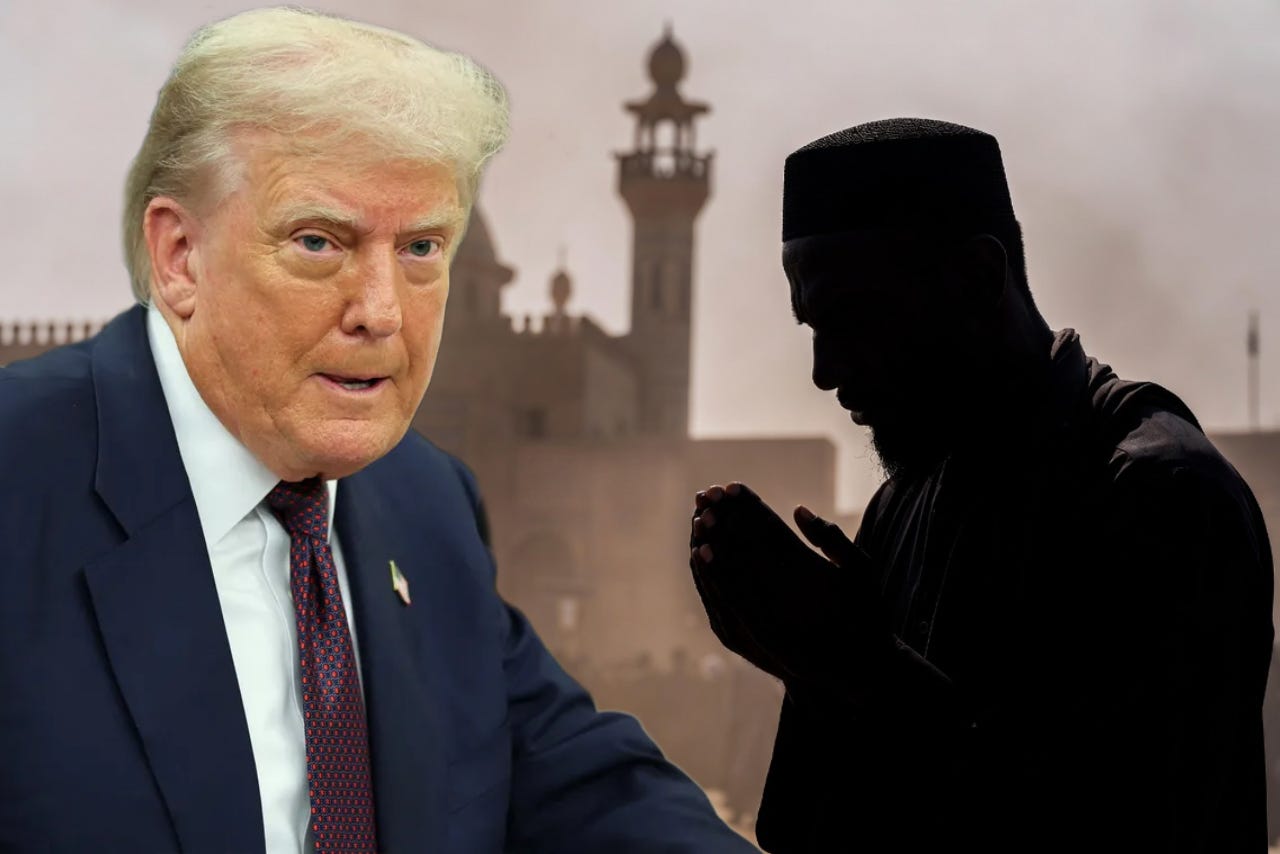
President Trump, now fully committed to Operation Erpic Fury, faces a chaotic swirl of competing voices claiming to represent Iran. There are at least two factions attempting to negotiate with the United States: the entrenched Islamist mullahs and their regime loyalists, who have ruled with an iron fist since 1979, and those opposition elements who position themselves as ready to take over from the mullahs. Any claim that these parties speak for the long-suffering Iranian people must be met with icy skepticism.
The Islamic Republic, born in blood and deception, operates not on good faith but on doctrines that explicitly bless deception and temporary truces when the faith—or the regime’s power—is under pressure. Western leaders who forget this invite betrayal, nuclear escalation, and the funding of global terrorism.
Two Quranic concepts underpin this Islamist playbook.
Hudna refers to a tactical truce, a pause in hostilities rather than genuine peace. It draws from the Treaty of Hudaybiyyah in 628 CE, when Muhammad agreed to a ten-year armistice with the Quraysh of Mecca. The agreement collapsed after two years when Muslim forces, having grown stronger, used a pretext to conquer Mecca.
Though the word “hudna” itself does not appear in the Quran, the precedent shapes Islamic jurisprudence. Surah At-Tawbah (9:1-12) underscores the conditional nature of treaties with non-Muslims, permitting abrogation when advantageous to Muslims. In practice, hudna is a breathing spell to rearm and resume jihad—whether wielded by the current mullahs clinging to power or by ambitious factions seeking to replace them.
Taqiyya, or sanctioned dissimulation, is more direct. Quran 3:28 instructs: “Let not believers take disbelievers as allies rather than believers... except when taking precaution against them in prudence.” Quran 16:106 adds that denying faith under compulsion is excused “while his heart is secure in faith.” These verses authorize Muslims to lie, feign friendship, or conceal intentions when Islam faces a threat. In Shia Islam, which dominates Iran, taqiyya has deep roots for survival and advancement. Both the ruling mullahs and any would-be successors have elevated it into statecraft: when nuclear ambitions, regional hegemony, or regime survival are at stake, deception becomes a religious duty.
The Iranian regime’s four-decade record is a relentless catalog of broken words. The 1979 seizure of the U.S. Embassy and 444-day hostage crisis shattered diplomatic norms despite initial assurances of restraint. The Algiers Accords that ended the crisis were followed by continued support for terrorism. During the Iran-Iraq War, the regime courted Western sympathy while pursuing prohibited weapons. In the nuclear arena, the pattern repeats with mechanical precision.
Iran signed the Nuclear Non-Proliferation Treaty yet built secret facilities revealed in 2002. The 2003-2005 Paris Agreement with the EU-3 promised suspension of enrichment; Tehran resumed once pressure eased. The Joint Comprehensive Plan of Action (JCPOA), celebrated as a landmark, quickly unraveled. Iran exceeded low-enriched uranium limits, installed advanced centrifuges, enriched beyond agreed percentages, and obstructed IAEA inspectors—particularly at military sites.
Even before the U.S. withdrawal from JCPOA in 2018, violations were routine. Afterward, Tehran accelerated: stockpiling uranium enriched to near-weapons grade, resuming Fordow operations, developing uranium metal, and limiting monitoring. Ballistic missile tests and proxy wars through Hezbollah, Hamas, and the Houthis continued unabated. Every “moderate” president—Khatami, Rouhani—delivered the same script: soothing rhetoric masking enrichment advances and terror financing.

These are not anomalies but rather instances of doctrinal consistency. The regime views negotiations as hudna: buy time, extract sanctions relief, fund proxies, then advance when strong. Billions in unfrozen assets have fueled aggression, not moderation. Supreme Leader Ali Khamenei and his inner circle see the West as infidels to be managed until Islamic dominance prevails. Even factions angling to supplant the mullahs carry the same ideological DNA; swapping one set of Islamists for another changes little if the underlying commitment to taqiyya and hudna remains.
President Trump, whose first-term “maximum pressure” campaign exposed the regime’s vulnerabilities and whose recent actions have further weakened it, must not repeat the naive optimism of prior administrations. Whether dealing with the mullahs or those positioning themselves to take over, Islamists claiming to negotiate “for the Iranian people” represent a theocratic tyranny that brutalizes its own citizens while lying to outsiders. The oppressed Iranian masses deserve genuine freedom, not another hudna that merely reshuffles the deck of oppressors.
Trump and his team, together with every Western government, must insist on tangible, irreversible concessions upfront: verifiable dismantling of enrichment, unrestricted IAEA access including military sites, a halt to ballistic missile programs, and cessation of proxy terrorism. These cannot rest on promises or easily gamed “snapback” mechanisms. Any violation must trigger automatic, devastating consequences—crippling sanctions, targeted disruption of nuclear infrastructure, diplomatic isolation that starves the regime—or its successors—of resources, and the very real promise of annihilation.
The Iranian Islamists cannot be trusted because their scripture and tradition command them to lie when Islam—or their rule justified in its name—is threatened. Hudna is preparation for renewed conflict; taqiyya is piety disguised as pragmatism. To negotiate on any other basis is to court disaster: a nuclear-armed theocracy, emboldened proxies, and eventual war on far worse terms.
Extreme caution is not cynicism. It is the bare minimum realism required when facing an ideology that sanctifies deceit. President Trump has the opportunity to lead with strength to a long-needed definitive conclusion. He must reject the deadly illusion that these mullahs—or any faction cut from the same cloth—can be charmed, or even coerced, into sincerity.
America’s security, regional stability, and the hopes of the Iranian people hang in the balance.


