

🎧 LISTEN TO THIS ARTICLE ON THE SUBSTACK APP
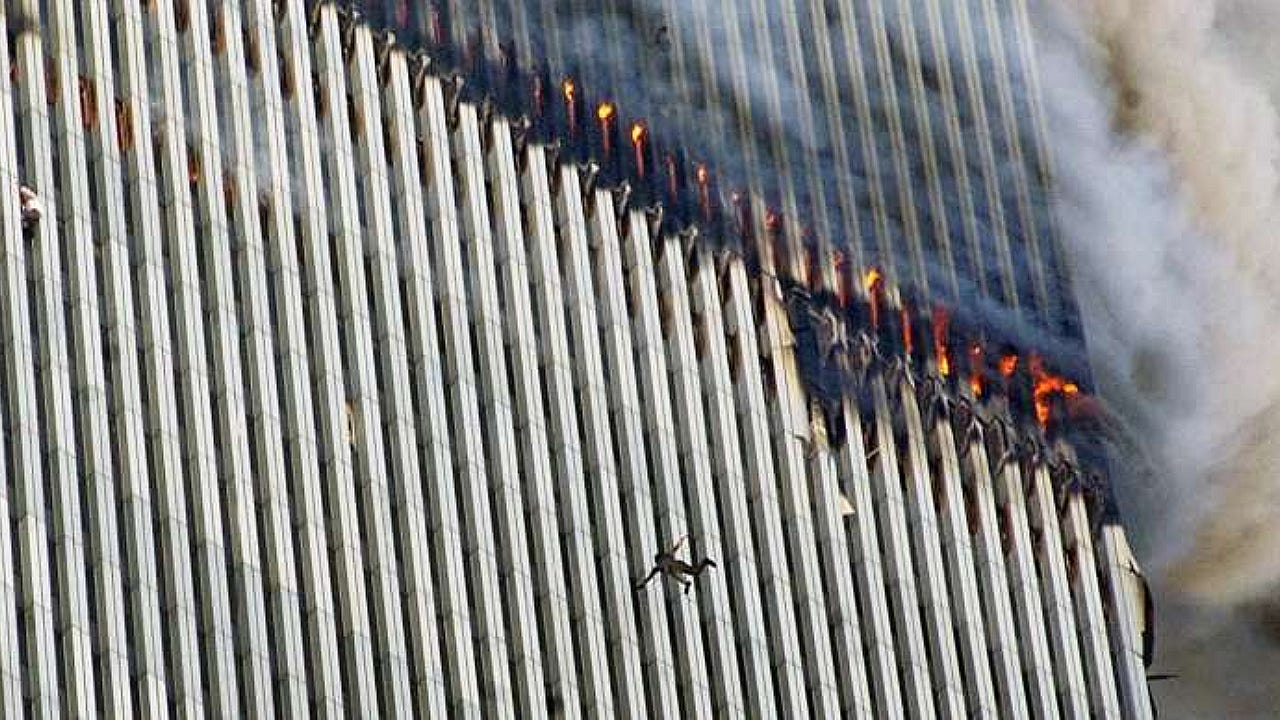
Twenty-five years later, the towers are gone, the Pentagon scarred and repaired, and a quiet field in Pennsylvania still holds the imprint of Flight 93. What remains is the duty to tell the truth about that morning so that those who never lived it can feel, even faintly, what the country felt when the sky itself became a weapon.
Every year, this is the hardest article for me to write. As I contemplate how to keep that memory alive—of the intense hurt and rage, the intense feeling of vulnerability—I am astounded that anyone should even have to. Yet, there are people today who were alive to witness those acts of mass murder, who are attempting to soft-pedal the events of that day. They are despicable and ugly; monsters of the Hitleresque kind, aiding and abetting a murderous culture that slaughtered 2,977 people on that fateful morning.
If you weren’t alive that day, try this: imagine every student in your high school—freshmen through seniors—plus every teacher, coach, secretary, custodian, and principal, erased in two hours. Not scattered. Not missing. Consumed in fireballs and then crushed under a collapsing mountain of steel and concrete, leaving only a crater and a pile of rubble that consumed those who once had names. That is the scale. Nearly three thousand people died. They were office workers, travelers, soldiers, cooks, traders, and first responders. They had families who waited for calls that never came. The nation watched it happen in real time, then watched the buildings fall, and understood that the world had changed in the space of a morning...forever.
The men who did it didn’t hide their purpose. Nineteen hijackers, acting for al-Qaeda, murdered in the name of their god. Their leaders had already published the reasons. Osama bin Laden’s 1996 and 1998 declarations of war—his fatwas—against America weren’t metaphors. They were religious and political documents that named the United States an enemy of Islam and called for the killing of Americans, civilian and military, wherever they could be found. The hijackers left letters and last testaments steeped in the same language of martyrdom and paradise.
After the attacks, some crowds celebrated, literally dancing in the streets and on rooftops. Some clerics and governments issued condemnations of convenience while the ideology that produced the killers continued to circulate.
Those who insist Islam is a “religion of peace” must still account for the words spoken before, during, and after the slaughter. They must account for a long history of expansion through violent conquest. And they must account for the fact that organized terrorism in the name of that faith didn’t begin on September 11 and didn’t end that afternoon.

Equally false is the claim, now common in some classrooms and political circles, that America somehow invited the massacre. That argument treats the dead as collateral in a morality play about American foreign policy. It’s an insult to the families who lived through the terror and to those who buried sons, daughters, husbands, wives, and parents. It’s a special insult to the families of the firefighters, police officers, and emergency workers who climbed into the towers while everyone else was trying to get out. Those men and women didn’t die because of some abstract American sin. They died because nineteen murderers chose mass slaughter as worship. Softening that fact or shifting the blame is a lie told to the living and a second injury to the dead.
I write this as a retired firefighter and paramedic. I know what it means to run toward smoke, fire, and danger when every instinct says run away. On that day, hundreds of first responders did exactly that. Citizens did it too—people on Flight 93 who understood what was happening and forced the plane into the ground rather than let it reach its target; office workers who stayed behind to help a stranger down the stairs; ordinary men and women who became extraordinary because the moment demanded it. Their courage isn’t a footnote. It’s the answer the country gave when the buildings fell.
Remember the names if you can. Remember the pictures of the jumpers, the dust-covered survivors, the flag raised in the wreckage. Remember that the attackers weren’t “militants” in some vague sense. They were jihadists who believed they were fulfilling a sacred duty. Remember the culture that formed them, praised them, and in too many places still excuses or romanticizes the same impulse. Forgetting any of that—or choosing to rewrite that history—doesn’t make us more generous. It makes it easier for us to be attacked again.
The proper response isn’t hatred of a people. It is to seek clarity about the acts, those who committed the acts, and those who support and make excuses for them. It is to seek clarity about the ideology that birthed those who consider—and considered—those acts as piety. It is a duty to be honest about the events of that day, first and foremost.
The dead of September 11 cannot speak. The living still can. Tell the story straight. Don’t let it be rewritten into something smaller, safer, or less true.
The crater is still there in memory. So are the bravery and the truth. Let’s keep all three.
For my fallen brothers of the badge and their families...
FOLLOW US ON X
FOLLOW US ON FACEBOOK
A Note About Subscribing:
At Underground USA, we pride ourselves on being fiercely independent—we only answer to our readers. This independence allows us to tackle tough questions, dive deep into important topics that often get overlooked, and share essays and podcasts, like this one, without asking for anyone’s approval.
Free subscriptions help us connect with a wider audience. They are the vehicle for the wide dissemination of the message. Paid subscriptions are what keep us going. They fund our research, document requests, interviews, fact-checking, and give us the time to dig deeper than just the headlines. Most importantly, they support something that’s getting harder to find: independent analysis that’s not swayed by advertisers, corporate sponsors, or political agendas.


