

🎧 LISTEN TO THIS ARTICLE ON THE SUBSTACK APP
Let me say the quiet part out loud and in plain English. Islam isn’t simply a religion, like your neighbor’s church is a religion. It’s a theopolitical system. That isn’t an insult. It is a factual description.
Muhammad was a preacher, certainly. He was also a general, a judge, and the head of a state in Medina. The Quran and the hadith go well beyond prayer and charity. They lay down clear rules for inheritance, for the legal standing of women, for unbelievers, for punishment, and for war.
Classical Islamic jurists divided the world into the house of Islam and the house of war, treating Sharia as the whole path of life. A Muslim can live by it privately and peacefully. But the system doesn’t promise to remain private. It was never meant to, and it never has.
Political Islam isn’t some modern spin on an otherwise purely spiritual faith. It’s an old interpretation, and Islamists in the West have been candid about their method: settle, build, normalize, and wait.
That’s why Sharia cannot simply be waved through as one more custom. Americanism is a deal: equal protection, free speech, free conscience, and government by consent under a Constitution no holy book gets to amend.
Sharia, according to schools of law still treated as authoritative, answers those questions differently. A woman’s testimony and inheritance don’t equal a man’s. Apostasy and blasphemy can bring death or brutal punishment. Homosexuality is a crime. Muslims and non-Muslims don’t occupy the same legal ground.
Family disputes can end up before religious bodies that apply rules a civil court would throw out. This isn’t some meme pulled from a campaign mailer.
Britain has dealt with dozens of Sharia councils for years—bodies that handle marriage, divorce, and custody and have been caught pressuring women back into bad marriages. In 2025, French civil servants gave President Macron a report on Muslim Brotherhood entryism: schools, charities, sports clubs, and town halls, all part of a plan to structure Muslim life from birth to death.
Across the European Union, ministers and researchers keep pointing to districts where Islamist networks, clan authority, and hostility toward police combine to form a parallel society. Seine-Saint-Denis and French banlieues like it have surfaced again and again in jihadist investigations. In Britain, informal Islamic law—not Parliament—sets the terms of family life wherever the enclave grows thick enough.
Europe has already run this experiment. We are simply starting the same one late.

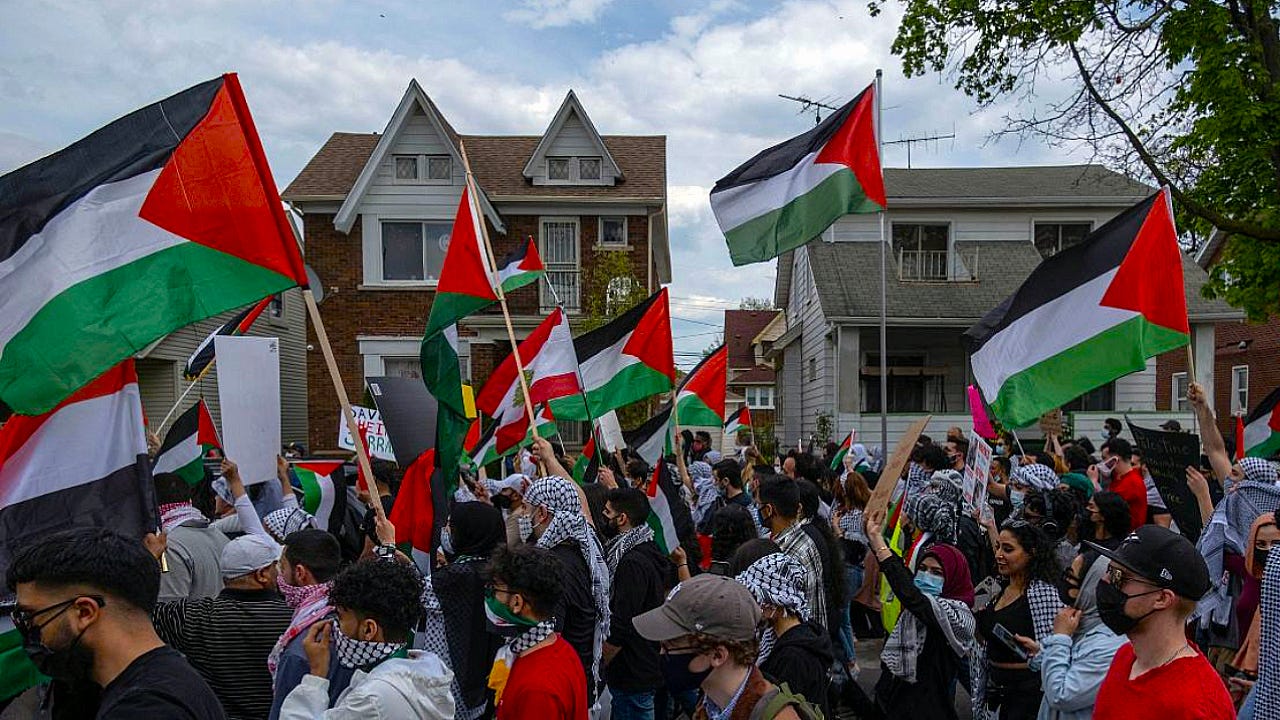
Now look around. Dearborn, Michigan, is the exhibit no one is supposed to name: a majority-Arab city with a Muslim mayor and Islamic norms visible on the street and in the council chamber. In 2026, a Detroit pastor stood up and said the city had been lost to Sharia. The mayor called that a smear. Fine. Dearborn has not adopted hudud flogging.
But the point comes before that. Concentrated settlement brings political capture, speech taboos, and selective courage long before anyone gets around to rewriting the statute book.
You can hear it before you can measure it. In Dearborn, the call to prayer sounds over loudspeakers throughout the day and into the early morning, and that same sound has risen over streets in Brooklyn. Neighbors who never voted for a foreign sacred schedule hear the adhan whether they want to or not. That isn’t a chapel bell ringing at noon. It’s a public claim on the hours of the day.
McKinney, Texas, just showed us the opening move. In August 2026, the city council voted 7–0 for a large Islamic association campus after years of debate. Residents raised concerns about Sharia, an imam tied to an Islamic tribunal the state had already examined, and a house of worship becoming a political base. Then came a recall drive.
Traffic was the polite complaint. The real concern was simpler: once the enclave is built, the debate over whose law governs comes too late. You don’t need to win every city. You only need to keep thickening your own communities while the host country loses its will to say no.
The motives are hardly secret. Islamist literature discusses hijra, loyalty to the ummah over the nation, and winning through births, migration, and institutions when the sword is unavailable. France’s own officials described dissimulation and capture from the bottom up. British Sharia bodies operate openly. European governments document the failures, then refuse to reverse them.
The sequence here looks much the same: mosque and school, tribunal and charity, bloc voting, then a council that will not give Sharia a firm no. Religious freedom protects worship. It doesn’t require the Republic to import a rival constitution and call that import neighborliness.
So be concerned. Be very concerned. A concentrated Muslim community guided by political Islam is not merely a new parish. It’s a foothold. Europe ignored those footholds. Now it’s managing hostile streets, grooming scandals, parallel courts, and ministers who name the threat but still don’t have the courage to act.
The time to worry is before the McKinneys, the Dearborns, and the next suburbs become our version of that same experiment.


