

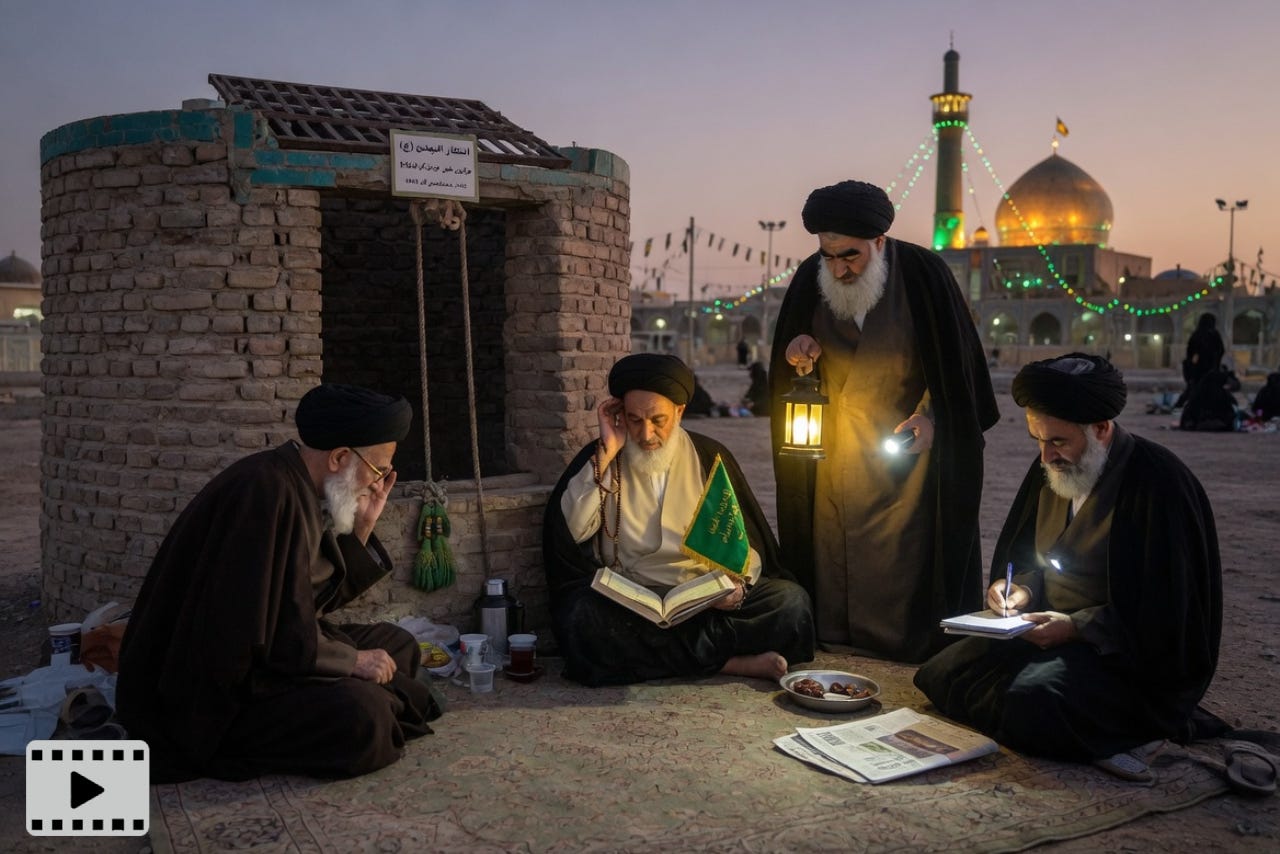
The Iranian regime’s stubborn endurance, even amid sanctions, military setbacks, and internal discontent, has long puzzled Western policymakers. A compelling hypothesis suggests the mullahs persist not merely through repression or oil revenue, but because Western leaders fundamentally misunderstand the ideological core driving them: Twelver Shi’ism.
Historian Stephen Kotkin, in the opening segment of his conversation with Peter Robinson on Uncommon Knowledge, highlights this disconnect. Western assumptions of rational self-interest, economic incentives, and eventual moderation have repeatedly collided with a regime animated by eschatological conviction rather than pragmatic integration into the global order.
Twelver Shi’ism, the dominant branch in Iran, holds that the Twelfth Imam, Muhammad al-Mahdi, entered occultation in the 9th century and will return as a messianic figure to usher in global justice before the Day of Judgment. This belief infuses Iranian governance with a sense of divine mission and patience across generations. For the clerical elite, history bends toward apocalyptic fulfillment, not liberal convergence. Policies of “maximum pressure” or diplomatic engagement often assume the regime can be bought off, isolated, or induced to defect—like Soviet elites tempted by Western comforts. Kotkin notes that success with other authoritarians misled the West into viewing Iran similarly. “We don’t really understand what a regime is,” he observes. It is not just elites at the top but a society and worldview shaped by ideology.
This mindset explains the regime’s resilience. Unlike secular dictators who prioritize personal survival and wealth, Twelver-inspired leaders see confrontation with the “Great Satan” and Israel as part of a cosmic drama. Martyrdom, resistance, and strategic patience align with awaiting the Mahdi. Proxy networks (Hezbollah, Houthis, Hamas) extend this struggle without requiring total victory today. Nuclear ambitions fit the pattern: not mere deterrence in a realist sense, but tools for a revolutionary order. Kotkin points out the irony of Iran negotiating nuclear issues via Pakistan—source of earlier proliferation—while the regime’s hardliners resist concessions that would dilute its identity.

Western misunderstanding runs deep. Post-1979 analyses often framed the Islamic Revolution as a passing phase of Third World radicalism, akin to other anti-colonial movements. Engagement strategies, from the JCPOA onward, bet on pragmatists within the system prevailing over ideologues. Yet the Supreme Leader and IRGC view accommodation as existential surrender. Kotkin emphasizes that many in the regime “do not want to be part of the West” and have no interest in defecting. Iran’s educated, often pro-Western population contrasts sharply with its rulers, but the theocratic structure insulates the elite.
This blindness has policy consequences. Sanctions bite, but the regime frames suffering as redemptive sacrifice. Military strikes expose vulnerabilities yet reinforce narratives of eternal resistance. Assumptions that economic pain or battlefield losses would trigger collapse ignore how Twelver eschatology reframes hardship as prelude to triumph. Kotkin’s analysis of authoritarian durability applies here: regimes survive by exploiting their own society’s grievances while maintaining ideological coherence at the top.
Critics might counter that material factors—oil, repression, Russian/Chinese support—matter more than theology. Yet ideology shapes threat perception. For Twelver hardliners, yielding to the West risks not just power loss but betraying divine will. This differs from communist regimes that eventually prioritized survival over utopia. Iran’s leaders blend religious certainty with modern tools: drones, missiles, cyber operations. The result is a hybrid durability that defies standard regime-change models.
Understanding this mindset demands intellectual humility. Kotkin urges recognizing that not all authoritarians share interchangeable motivations. Effective policy requires pressuring the regime to confront its governance failures without offering lifelines that allow it to regroup. Exploiting internal fissures—between a youthful, secular-leaning populace and aging clerics—remains key, but only if paired with clear-eyed realism about the ideological stakes.
The mullahs’ survival is no accident of geopolitics alone. It stems from a worldview the West has chronically underestimated. Until policymakers internalize the Twelver dimension—its patience, apocalyptic horizon, and rejection of Western telos—Iran’s theocracy will continue outlasting predictions of its demise. History shows ideological regimes fall when their sustaining myths erode internally. For now, the hypothesis holds: Western strategic failure begins with failing to grasp who the mullahs truly are.


