

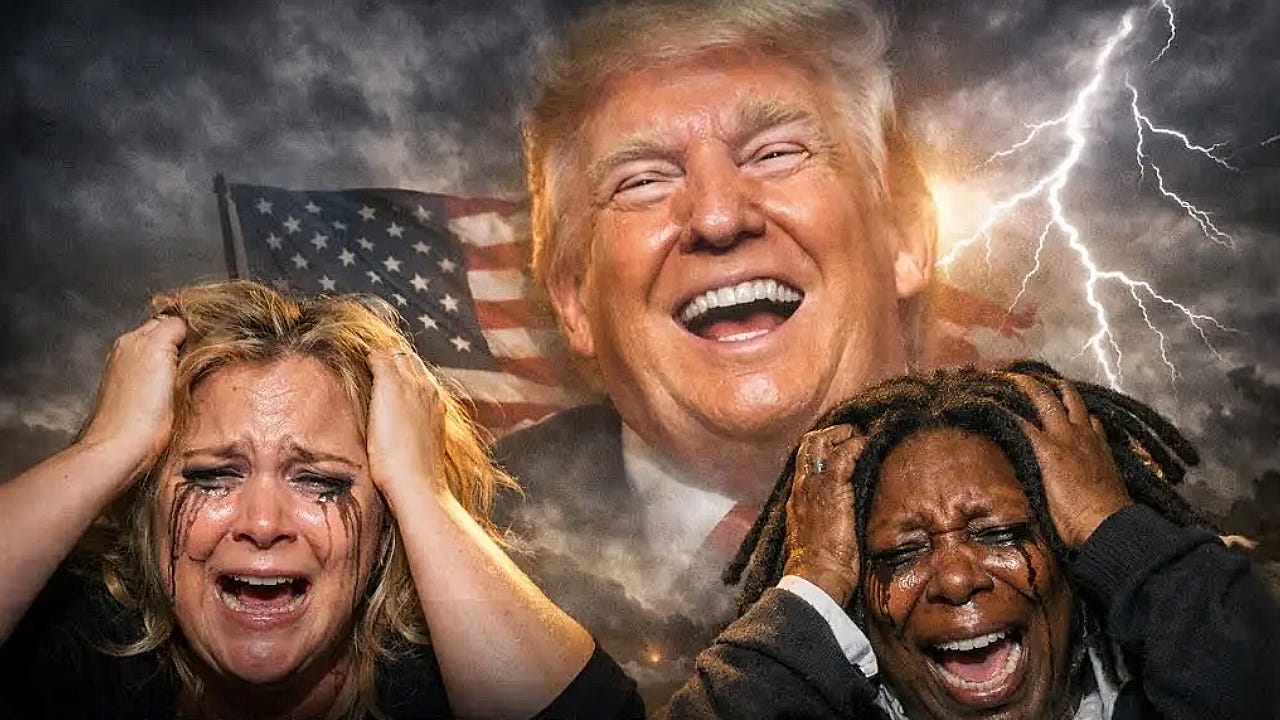
For nearly a decade, the American press has maintained a clear double standard that is so consistent it nearly seems absurd. When Donald Trump is in the White House, every executive order, regulatory decision, personnel appointment, or bureaucratic memorandum was immediately labeled as a “Trump” action. Headline writers often overlooked the actual agency involved, the career officials who drafted the document, or the statutory authority that enabled it. Instead, it was simply referred to as Trump’s. Trump’s EPA, Trump’s DOJ, Trump’s border policy—everything was personalized and intentional.
When you look at the Obama or Biden years, the press corps undergoes a remarkable transformation. Suddenly, the machinery of government operates independently. Actions are referred to as “the EPA’s new emissions rule,” “Homeland Security’s updated guidance,” or “Justice Department prosecutors.” The president’s name often seems optional and is frequently omitted, particularly unless the story is favorable. This institutional distance is reinstated the moment a Democrat takes office. This isn’t just a coincidence; it’s a deliberate propaganda strategy aimed at keeping Trump perpetually scrutinized while shielding his predecessors from accountability.
Observe the pattern carefully, and the intent becomes clear. By linking Donald Trump’s name to every government action—successful or unsuccessful, routine or significant—the media transforms ordinary administration into a personal issue. A regulatory rollback is not just a regulatory rollback; it becomes “Trump’s attack on the environment.” A personnel decision is not merely a personnel decision; it is labeled “Trump’s purge.” The cumulative effect is that Trump becomes synonymous with the government itself, making opposition to a policy equivalent to opposition to his character. This illustrates what is often referred to as Trump Derangement Syndrome: the inability to distinguish between the officeholder and the office, or between the policy and the person. The press doesn’t simply report this derangement; it actively creates and perpetuates it.
In contrast to the treatment of Donald Trump, the coverage of Barack Obama and Joe Biden presents a different approach.
During Obama’s presidency, when the IRS targeted conservative groups, the media framed the story around “IRS officials” or simply referred to “the agency.” Similarly, when the EPA expanded its regulatory authority under the Clean Power Plan, the coverage portrayed the agency as an independent entity focused on science, rather than as a tool of presidential influence.
The same trend continued under Biden. Issues like vaccine mandates, energy leasing suspensions, student loan actions, and changes in border policy were frequently described as decisions made by bureaucratic agencies or departments. The president’s name was mentioned when it was advantageous but omitted when it was not. Career civil servants were depicted as skilled technocrats rather than as political pawns.
This use of institutional language acted as a buffer, allowing the president at the time to take credit for popular outcomes while the media absorbed the blame for less favorable ones by spreading responsibility throughout the bureaucracy.
This selective personalization is not a cloaked attempt at neutral journalism; it is strategic. By positioning Trump as the central figure in every story, the media accomplishes two related goals:
First, it keeps the activist base in a constant state of emotional arousal. Each new “Trump” headline serves as a dopamine hit for those who already view him as an existential threat. This creates a feedback loop of outrage that doesn’t require fresh scandals—simple administrative actions are enough.
Second, this approach fatigues the broader public. For the majority of people who don’t thrive on political drama, the relentless focus on Trump in ordinary governance leads to exhaustion. Readers begin to tune out not because they support or oppose every decision, but because the coverage has become predictable, nauseating, and overblown. This fatigue is intentionally sought; a public weary of hearing his name is less likely to scrutinize the positive substance of the policies associated with it.
The hypocrisy becomes particularly apparent when the same agencies change their stance. A decision made by the EPA under Trump is labeled as Trump’s. Yet, when the same agency, functioning under the same legal authorities but with different political appointees, makes a similar decision after a Democrat takes office, it is suddenly referred to as “the EPA” once again. The press, which spent years claiming that the bureaucracy is independent and professional, conveniently recognizes presidential influence only when the president in question is one they dislike. This isn’t a lack of consistency; it’s intentional.
None of this requires conspiracy theories about secretive newsrooms. Instead, it reflects the typical incentives of a polarized media industry that has given up on the pretense of being neutral. Outrage generates traffic, and personalization amplifies that outrage. Donald Trump, because of his temperament, style, and political approach, serves as the ideal figure for this dynamic. In contrast, Barack Obama and Joe Biden didn’t fit this narrative as well.
Consequently, the media framing has shifted. The outcome is a public discourse where Trump’s name is closely associated with every aspect of government, while his predecessors benefit from a degree of institutional anonymity.
The cost of media bias is evident. Trust in the media continues to decline as audiences recognize the double standards, even if they struggle to articulate them. Debates on policy take a backseat to personal attacks. Moreover, a significant portion of the population remains in a state of low-grade confusion, which the press both identifies and intentionally encourages.
Until a consistent standard of attribution is applied, regardless of who occupies the office—meaning that terms like “the administration” or “the agency” should be used equally for all presidents—media coverage will persist as it has been: not genuine reporting, but targeted psychological operations disguised as journalism.
The cloak of deception has been lifted. The media’s manipulation of the people has been exposed. And we should all be extremely pissed off.
A Note About Subscribing:
At Underground USA, we pride ourselves on being fiercely independent—we only answer to our readers. This independence allows us to tackle tough questions, dive deep into important topics that often get overlooked, and share essays and podcasts, like this one, without asking for anyone’s approval.
Free subscriptions help us connect with a wider audience. They are the vehicle for the wide dissemination of the message. Paid subscriptions are what keep us going. They fund our research, document requests, interviews, fact-checking, and give us the time to dig deeper than just the headlines. Most importantly, they support something that’s getting harder to find: independent analysis that’s not swayed by advertisers, corporate sponsors, or political agendas.


