

🎧 LISTEN TO THIS ARTICLE ON THE SUBSTACK APP
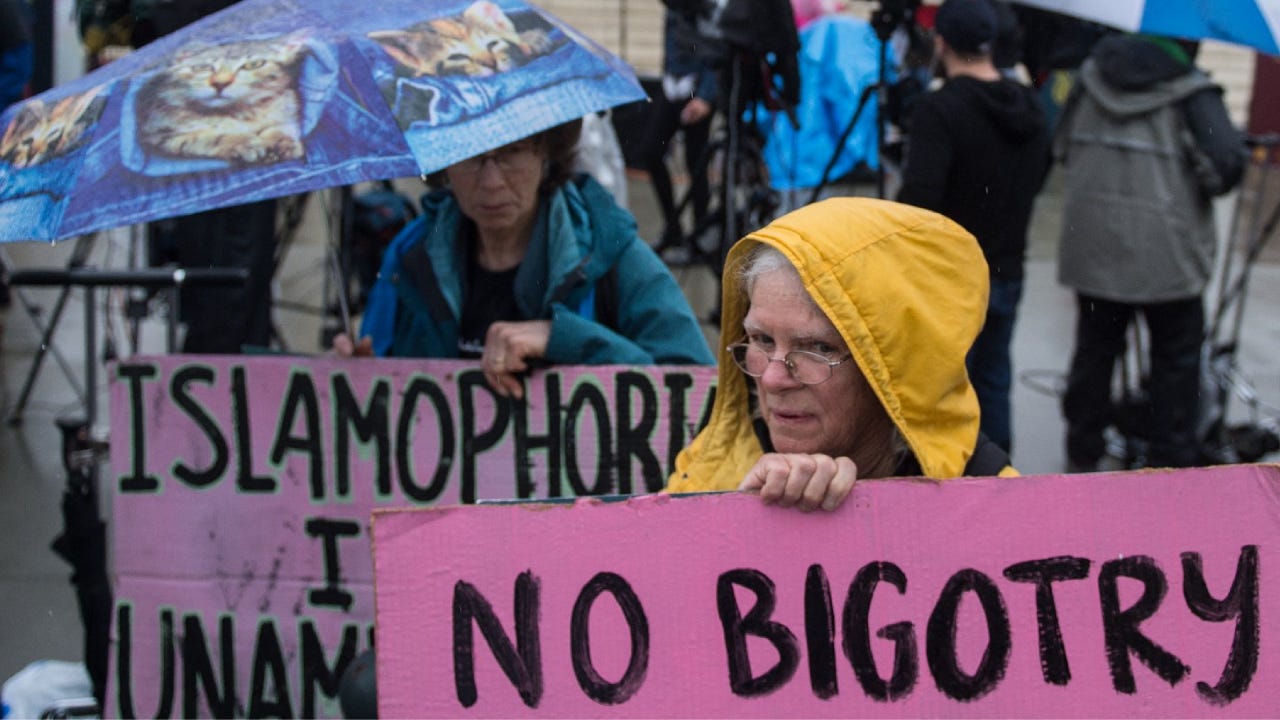
The suffix “phobia” means an irrational fear. Arachnophobia, for example, is an irrational fear of spiders, while claustrophobia is an irrational fear of enclosed spaces. So when someone calls you “Islamophobic,” they’re basically saying your concerns about Islam are irrational, baseless, or even pathological. But that label often has little to do with the actual arguments, concerns, or motivations of the people being targeted by it.
Most people called Islamophobic aren’t cowering under the bed, terrified of some abstract religion. They’re watching what they see as the aggressive spread of Islamist ideas into free societies, and they’re saying no.
They point to parallel societies, demands for Sharia courts, honor-based violence, female genital mutilation, and doctrines that treat women and apostates as subordinate or traitorous. They also point out that numerous major terrorist attacks in the West have drawn from that same ideological well. Disagreeing with this expansion isn’t a “phobia”. It’s pattern recognition shaped by years of troubling evidence and lived experience.
Islamism—the political program that seeks to put Islamic law above secular law—doesn’t sit comfortably beside the Enlightenment values that built the free West. Free speech, equal rights for women, individual liberty over group identity, and the separation of religion from state power are non-negotiable principles here. Orthodox Islamic doctrines involving blasphemy, apostasy, gender roles, and the supremacy of the ummah clash directly with those principles.
When the free West acts as though that conflict doesn’t exist, it gives ground. Opposing that kind of political expansion is a legitimate position rooted in self-preservation, not an automatic sign of bigotry.
The people who shout “Islamophobia” the loudest are often on the Left and far Left. They use the word as a political weapon, one designed to encourage self-censorship. Question mass migration from cultures with conflicting values, mention demographic changes in European cities, or point out that certain crimes may follow a religious or cultural pattern, and suddenly you’re treated as the problem. Their objective is pretty simple: make ordinary people keep quiet so that major social and political changes can continue without meaningful pushback from the societies being transformed.
Just look at the United States. When CNN commentator Scott Jennings called US Rep. Ilhan Omar (DS-MN) a public-relations agent for Hamas after she downplayed the October 7 attacks in Israel and emphasized ceasefires, members of the Squad erupted. US Rep. Alexandria Ocasio-Cortez (DS-NY) called the remark “blatant Islamophobia.” US Reps. Cori Bush (DS-MO), Ayanna Pressley (D-MA), and others quickly joined in, demanding that CNN denounce Jennings and remove him. Never mind Omar’s own history of controversial comments about Jewish political influence and money. The label itself seemed to be the point: turn criticism into hatred, and then tell the critic to stop speaking. US Rep. Rashida Tlaib (DS-MI) and other Squad members have played the same card whenever their positions have faced sustained scrutiny.

In Britain, the pattern is even clearer—and even more damaging. Labour MP Sarah Champion, who represents Rotherham, wrote that Britain had a problem involving British Pakistani men who raped and exploited white girls. She was forced out of Jeremy Corbyn’s shadow cabinet amid accusations of “Islamophobia.” By then, years of grooming-gang scandals in Rotherham, Rochdale, Telford, and elsewhere had already exposed a pattern documented in official reports. Even so, much of the Left seemed to prefer silence over confronting an uncomfortable truth.
Labour later adopted a definition of Islamophobia that treats discrimination based on “Muslimness” as a form of racism. Critics say that definition has been used to smear people who dare to discuss the gangs. Keir Starmer described some demands for new national inquiries as opportunistic appeals to the far right. Critics also accuse Humza Yousaf and Sadiq Khan of responding in much the same way to concerns about Islamist influence.
The message much of the public hears is clear: notice the pattern, and you may be punished—even if you’re a Labour MP trying to protect vulnerable girls.
Canada has gone down a similar road. Justin Trudeau’s government supported Motion M-103, which condemned Islamophobia, and later created a special representative’s office to combat it. Under Amira Elghawaby, that office opposed Quebec’s secularism laws and, in the eyes of critics, blurred the important line between genuine anti-Muslim bigotry and legitimate concerns about Islamist influence inside public institutions. People who question unchecked immigration or parallel legal systems can quickly find themselves branded with the same label.
The practical effect is to chill debate before it even begins, while shielding networks that promote political Islam under the much broader cover of anti-racism.
Across the free West, the same tactic keeps showing up. After terrorist attacks in France, Germany, Sweden, and elsewhere, left-leaning politicians and media outlets often rush to warn everyone about Islamophobia while paying far less attention to the ideology that motivated the killers. Politicians who voice concerns about no-go areas, parallel societies, or demands for blasphemy restrictions run into the same smear. But this debate shouldn’t be confused with protecting Muslims from discrimination. Real prejudice against individuals is wrong and, in many forms, already illegal—as it should be. The real question is whether a theopolitical system is being protected from honest examination, open debate, and vigorous public criticism.
The Left and far Left too often treat resistance to Islamism’s expansion as some kind of moral failure. They would rather import some of the problems found in the places people are fleeing than admit that culture, ideology, and doctrine actually matter. The predictable result is self-censorship. Ordinary citizens keep quiet because they fear being called bigots by politicians who seem unwilling to defend basic Enlightenment principles.
But people who oppose that expansion have every right to speak openly and forcefully. Their concerns are rational, evidence-based, and worthy of serious debate. Most times the “phobia” label is the irrational part—a rhetorical weapon that pressures free people to police their own speech.
Don’t hand those who wield that label more power than they deserve. Stand your ground, make your case, and refuse to be silenced.


