

As the 2026 midterm elections approach, a feeling of unease is spreading among Republican voters. Although polls may show promise and recent election cycles have yielded victories, many in the GOP base sense a deeper vulnerability. The national and state Republican Parties have shown neither urgency nor creativity in the special elections of 2025 and 2026. While Democrats treat every race as a crucial battleground in a continuous fight, GOP leadership continues to rely on outdated strategies and a sense of entitlement. This complacency risks squandering hard-won advantages against an opponent that remains constantly active.
The Democrat Party, particularly under its Alinskyite far-left leadership, has mastered “the long game.” Saul Alinsky’s Rules for Radicals explicitly demands “keeping the pressure on,” with operations that maintain constant strain on the opposition. Action, Alinsky taught, flows from unrelenting heat.
Democrats have internalized this, embracing nonstop campaigning with no off-season. Every special election, local school board fight, and state legislative contest becomes ground zero. Hakeem Jeffries captured the ethos perfectly: “Maximum warfare, everywhere, always.” This isn’t rhetoric—it’s doctrine. Progressive activists, steeped in Marxist organizing principles, flood the zone with protests, lawsuits, media campaigns, and grassroots mobilization. They view politics as total war aimed at fundamentally transforming America.
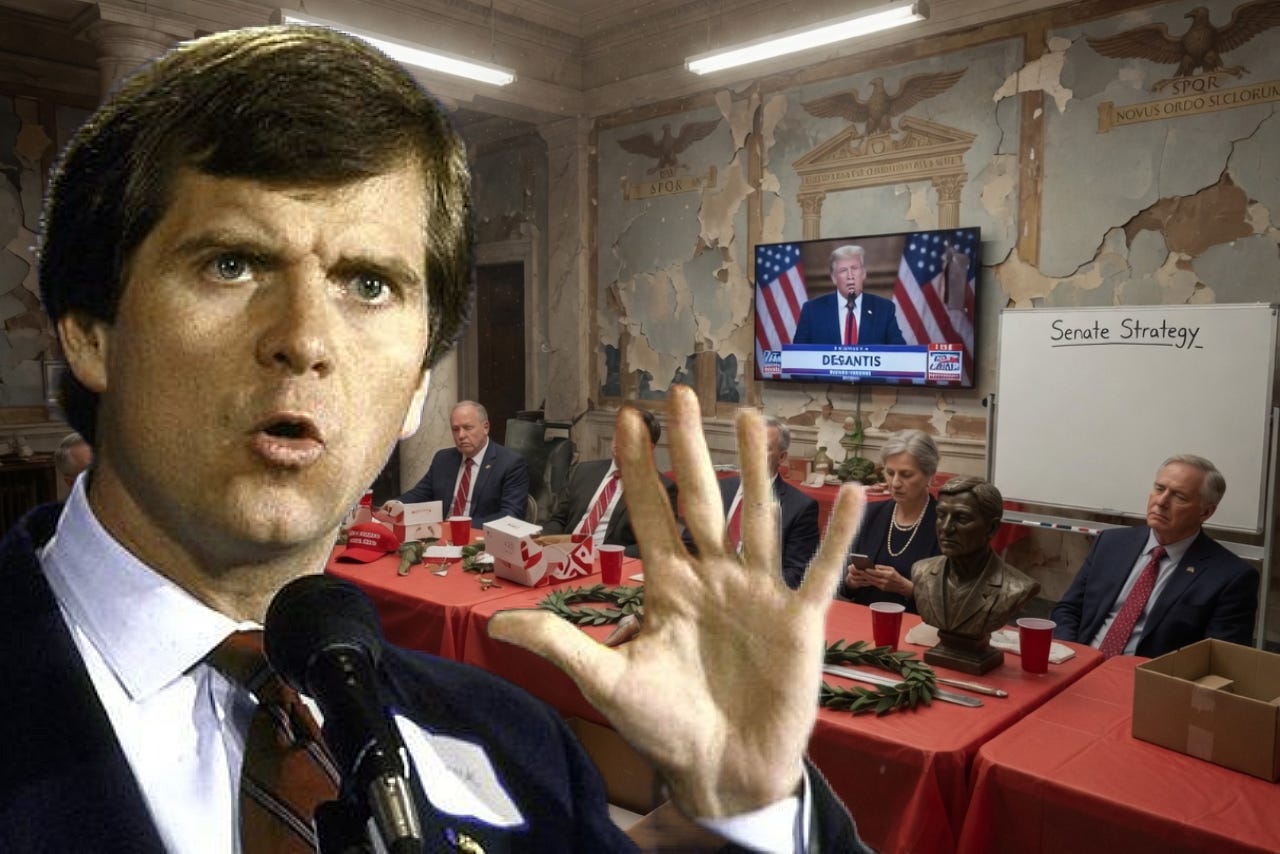
Republicans, by contrast, have lacked a genuine political tactician at the helm since Lee Atwater. Atwater, the hard-charging South Carolinian who rose to chair the Republican National Committee, thrived on emotional wedge issues, aggressive negative campaigning, and a win-at-all-costs mentality. In the 1980 congressional races, he deployed push polling and personal smears to secure victories. He helped Ronald Reagan dominate the South and orchestrated George H.W. Bush’s 1988 triumph over Michael Dukakis through the infamous Willie Horton ad, which highlighted crime and furlough policies to devastating effect.
Atwater wasn’t afraid to get dirty—using race, class, and cultural resentments as wedges—while staying laser-focused on turnout and message discipline. His tactics bridged old-school machine politics with modern media warfare. After Atwater’s untimely death in 1991, the GOP never truly replaced his street-fighting instinct. Subsequent leaders offered polish and fundraising spreadsheets, but little of the raw ingenuity required to counter relentless ideological foes.
Without Donald Trump’s disruptive, outside-the-Beltway energy, the GOP would likely have faced devastation in both 2016 and 2024. Trump bypassed sclerotic party structures, building parallel operations fueled by rallies, social media dominance, and unfiltered populist messaging. The Republican establishment’s status-quo campaigns—polished ads, consultant-driven focus groups, and polite debates—proved ineffective against cultural tides. Trump’s extracurricular efforts exposed how antiquated the party machine had become: risk-averse, donor-dependent, and disconnected from working-class realities.
Special elections since then reveal the same pattern. While Democrats pour resources into every vacancy with coordinated ground games, Republican responses often feel reactive and underfunded, hampered by infighting and hesitation to “go negative” or innovate.

At every level—national, state, and local—the GOP remains stacked with leadership that treats politics as a waiting game. “It’s my turn at the top” defines too many chairs, senators, and committee heads. These figures haven’t evolved messaging for a 24/7 digital battlefield or accepted that campaigning never stops. They remain tethered to inside-the-Beltway and statehouse norms: chamber-of-commerce rhetoric, consultant echo chambers, and seasonal electioneering. This leaves them ill-equipped to match hyperpartisan Democrat activists who operate like a well-oiled Marxist machine—coordinated, ideological, and ceaseless.
While Dem operatives train the next generation in community organizing and lawfare, GOP talent pipelines favor loyalty over combat effectiveness. The result? Missed opportunities in specials that should have been easy pickups, signaling weakness heading into 2026.
Voters sense the disconnect. Enthusiasm gaps widen when the party fails to project strength or counter the left’s cultural hegemony. Democrats seek not mere policy tweaks but the “fundamental transformation” of the United States into a Democratic Socialist state—code for centralized government control, wealth redistribution, eroded individual liberties, and identity-based power structures. Their activists pursue this vision with religious fervor, unburdened by norms of fair play. Republican leadership’s complacency hands them openings.
It’s time for the GOP to reclaim its winning ways through Atwater-style leadership. This demands figures unafraid to take chances, as Trump did in 2016 and 2024. Embrace bold messaging that highlights Democrat failures on borders, crime, inflation, and education. Deploy aggressive countermeasures—targeted digital campaigns, relentless opposition research, and ground efforts that match Democrat intensity. Reject Beltway caution in favor of pragmatic populism that prioritizes victory over decorum. Develop tacticians who understand modern tools: AI-driven targeting, influencer networks, and constant-pressure operations that mirror Alinsky’s playbook but in service of constitutional principles.
Republican voters delivered majorities expecting results, not excuses. If party leaders continue sleepwalking through specials and midterms—and failing to achieve goals in the Senate that the American people have mandated —nervousness will turn to frustration—and deserved electoral punishment.
The stakes transcend one cycle. Democrats play for keeps, aiming to remake the Republic. Republicans must respond with equivalent resolve: innovative, relentless, and victory-oriented. Atwater proved it works. Trump revived it. The party must institutionalize it before the long game slips away.


