

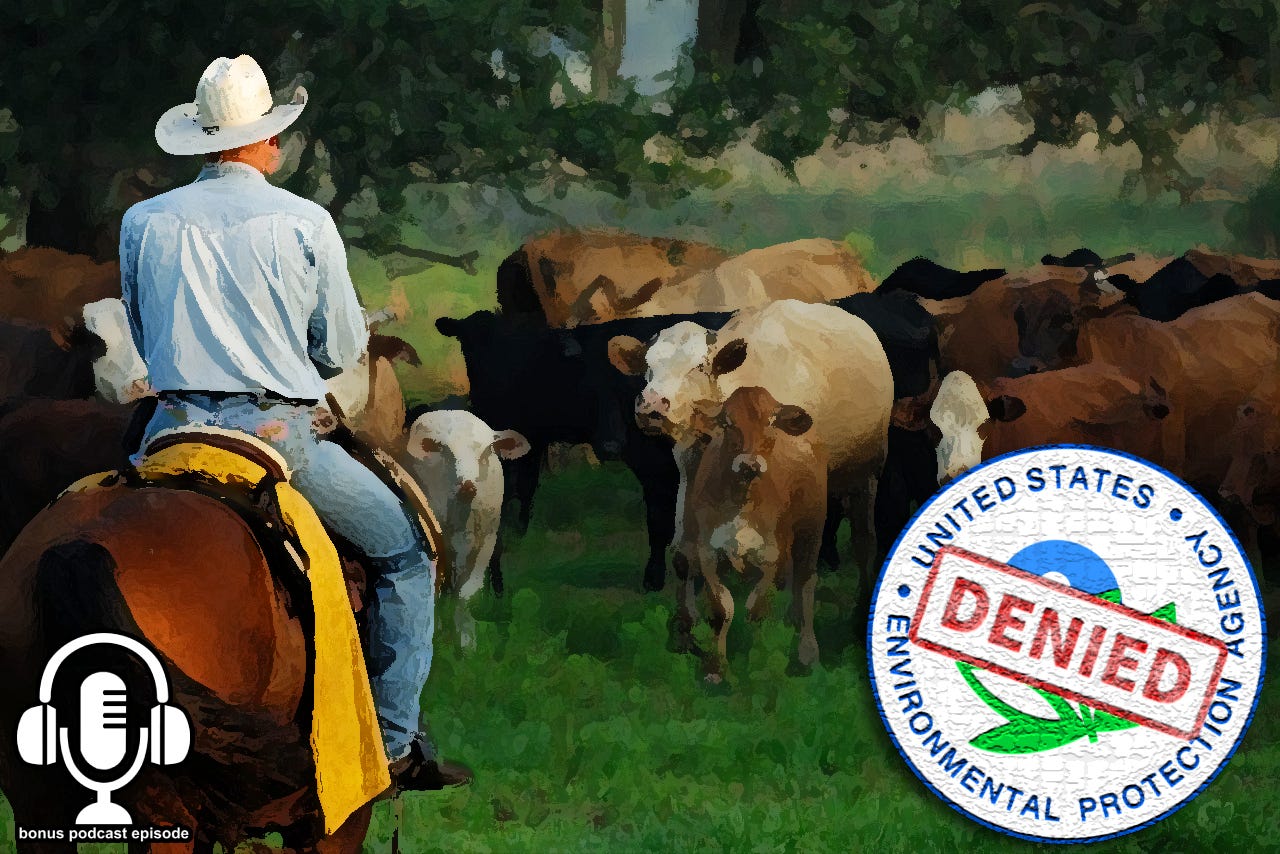
Listen to this bonus segment of Underground USA on America’s Third Watch, broadcast nationally from our flagship station WGUL AM860 & FM93.7 in Tampa, Florida
The United States Environmental Protection Agency (EPA) recently proposed a new rule that could significantly impact the meat processing industry. The proposed regulation will place thousands of meat processing facilities under the EPA's jurisdiction, a regulatory overreach that has been rebuked in a separate lawsuit brought before the US Supreme Court.
While the agency claims the new rule will improve water quality, protect human health, and protect the environment, critics rightly argue that it will lead to the closure of many small processing facilities and contribute to further monopolistic consolidation in the meat industry.
It is crucial that the details of the proposed rule, its potential impact on small meat processors, and its implications for the broader meat industry are considered and prioritized over ideology before the strong arm of overreaching and authoritative government bureaucracy kills off small ranching in the United States.
The EPA's Proposed Rule: Ideology Over People
According to Dr. Robert Malone, the EPA is proposing a regulation to revise the technology-based effluent limitations guidelines and standards (ELGs) for the meat and poultry products (MPP) point source category. The proposed rule is being implemented under the Clean Water Act and aims to reduce the discharge of pollutants from meat processing facilities into water bodies.
According to Dr. Malone, the proposed regulation will bring 3,879 meat and poultry products (MPP) processing facilities under the agency's jurisdiction. The new rule will require costly upgrades for meat processing facilities, estimated at $300,000-$400,000 for the initial upgrade, with annual maintenance fees of $100,000. These costs will disproportionately affect small processing facilities, which may be forced to shut down or sell out to larger corporations.
Implications for Small Meat Processors & Buy Local
Small meat processing facilities play a crucial role in providing local meat sources for consumers. The closure of these facilities will result in fewer local meat options for consumers and contribute to greater consolidation in the meat industry. In recent years, the concentration of cattle processing has increased significantly, with four companies accounting for 85% of US grain-fattened cattle processed in 2018, according to the USDA. These companies also comprise about 70% of total US beef production, including hamburger meat.
The concentration of cattle processing has increased from 25% in 1977 to 71% in 1992 due to larger processing plants. Meatpackers benefit from lower processing costs by operating bigger facilities. In 1977, 84% of US steers and heifers were processed in smaller plants, while by 1997, that share dropped to 20%. The big four processors in the US beef sector are Cargill, Tyson Foods Inc., JBS SA, and National Beef Packing Co.
The EPA's current rule, enacted in 1974 and last amended in 2004, applies only to "approximately 150 of the 5,055" small processors in the US.
The proposed rule is a direct attack on the buy local foods movement, as local meat producers would likely no longer have a nearby facility to process meat. This would make it more difficult for consumers to access locally sourced meat and could lead to an increased reliance on large-scale meat producers.
An estimated 910 million pounds of protein are expected to be removed from the US food supply if the rule change goes through as written.
Proposed Legislation to Stop the Rule
In response to the proposed rule, there is currently proposed legislation to stop it (HR7079, also known as the "Beef Act"). The bill aims to ensure that the EPA does not implement any new or revised ELGs for the MPP point source category until it conducts a thorough analysis of the potential economic impact on small businesses.
The bill also requires the EPA to consult with all those the regulation would affect, including small meat processors, to ensure that any new or revised ELGs are based on sound science and do not disproportionately impact small businesses.
The Globalist Takeover & Its Impact on the Food Industry
The globalist takeover by the arrogant elite has been gradually unfolding before our very eyes, manifesting in various aspects of our lives. From finance and healthcare to housing and transportation, the world is being reshaped to fit the globalist agenda, which is being pushed by the United Nations and the wealthy miscreants of the World Economic Forum, who would like to see insect flour in everything we eat.
These coordinated and intentional attacks include the global food system, specifically protein sources (beef, pork, and poultry). They are aimed at creating food shortages and famine, which will ultimately lead to the replacement of traditional farming and livestock with indoor-grown produce and lab-created protein alternatives.
The global elites’ plan is to eliminate traditional farming and livestock, which have been the foundation of our food systems for centuries. By doing so, they intend to gain complete control over the production and distribution of food, thereby ensuring that they own and control the new, lab-created protein alternatives.
This move will have devastating consequences for the environment and farmers' livelihoods and will also result in a significant shift in our diets and eating habits.
While it may seem that there is a wide range of food brands available in the market, giving the illusion of competition, the reality is quite different. The food industry is, in fact, monopolized by fewer than a dozen companies, which, in turn, are largely owned by BlackRock and Vanguard.
This concentration of power in the hands of a few corporations is a clear indication of the globalist takeover and their ultimate goal of complete control over the food industry.
As the globalist agenda continues to unfold, our ability to purchase food will become increasingly tied to our digital identity and social credit score. This means that access to food will no longer be solely based on one's financial capabilities but will also be determined by their adherence to the globalist agenda. Those who do not conform to the desired standards or express dissenting opinions may find themselves unable to purchase food, leading to a dystopian society where the basic human right to sustenance is controlled by a select few. This notion is validated with an honest examination of how the governments of the world bullied their citizenry during COVID.
The consequences of this globalist takeover extend far beyond the food industry. It is a multifaceted issue that affects various aspects of our lives, from the way we work and live to our individual freedoms and privacy. As the world becomes increasingly digitalized, our reliance on technology and interconnectedness will make it easier for the unelected globalist elite to monitor and control our actions and decisions.
What We Must All Do To Preserve Our Freedoms
To combat this growing threat, it is crucial that individuals become more informed about the globalist agenda and its implications. By understanding the forces at play, we can make more informed decisions about our consumption habits and support local, sustainable food systems that prioritize the health and well-being of both humans and the environment, including small ranchers and their associated small-business processing facilities.
The globalist takeover is an elitist-centered cancer that is rapidly changing the world as we know it, with the food industry being one of its primary targets. It is pivotal that we become informed about this ongoing threat and take action to protect small meat processors and the “Buy Local Foods” movement. It is, therefore, critical that the public supports the proposed legislation to stop the rule and urges their local congressional representatives to do the same.


Take Back Your Mind
Think For Yourself
As my beloved Grandpaw told me years ago....."control the water, control the food....control the people". We must get the ABC agencies out of our lives!!! We are slaves to the elite and Goverment. It always reminds me of Hunger Games....let me welcome you all to District 12.