

🎧 LISTEN TO THIS ARTICLE ON THE SUBSTACK APP
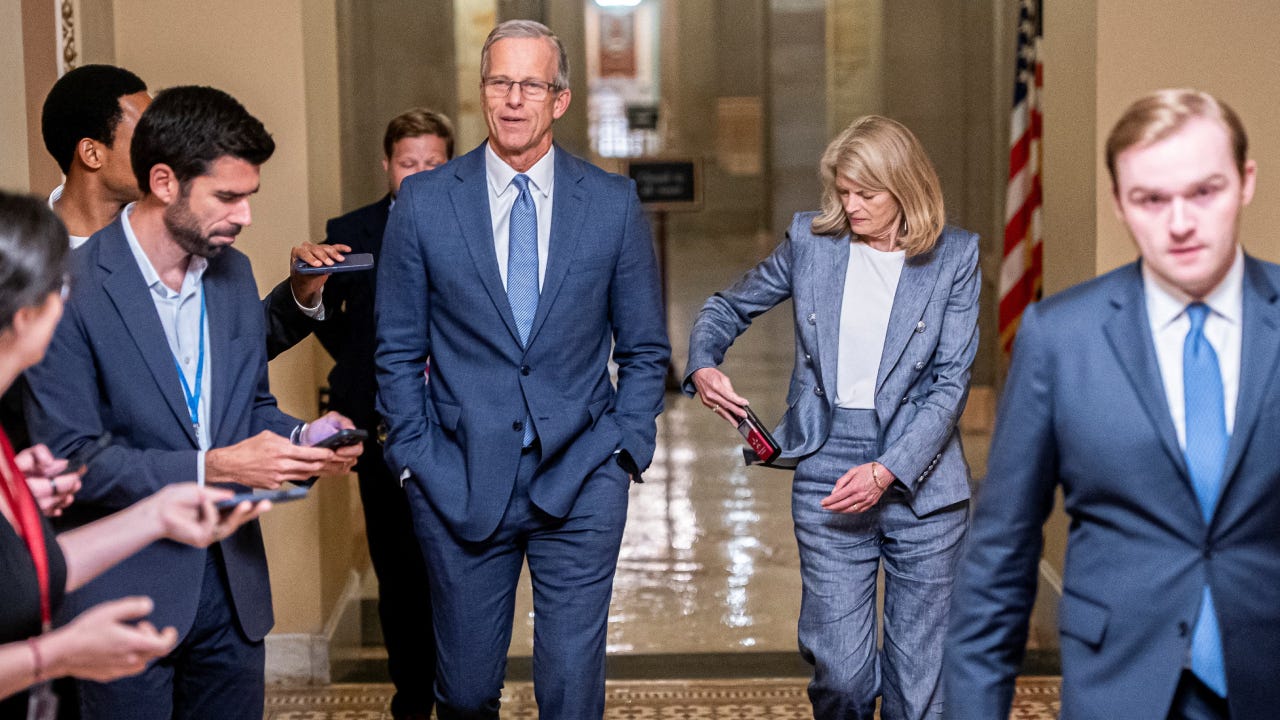
The Republican Party’s pathetic habit of handing power to the next insider in line has produced a Senate leadership class that helped hand away the chamber in the 2026 midterms.
At every level—county, state, and national—the idea that seniority and club membership matter more than substance needs to go. The party needs critical and strategic thinkers, not another round of good old boys and Washington insiders who treat elected office like a lifetime reward for patiently waiting their turn. The job is to win and govern, not collect a title. Instead, the current system keeps producing failures who protect their positions while the country is slowly eroded by Islamo-Marxist infiltration.
John Thune (R-SD) and Lisa Murkowski (R-AK) are prime examples of this anointed mediocrity.
Thune, the uninspiring successor who took over from Mitch McConnell (R-KY), spent the majority years managing decline instead of pushing an agenda forward. He put process, getting along with opponents, and avoiding tough fights ahead of delivering what voters actually wanted. What did that get Republicans? A chamber that wasted the opportunity of unified government while Democratic Socialists and their allies defined the issues and Republicans stayed on defense.
Murkowski, the perennial party saboteur, has spent years treating Republican priorities like suggestions she can take or leave. Her games—breaking ranks on nominations, spending, and cultural issues while seniority shielded her—projected weakness and split the conference when unity mattered most. Neither seems to know how to put together a message that ordinary voters will actually hear and understand
Both came straight out of the same insider system. Thune was the dependable next man in line. Murkowski was the familiar moderate, protected by geography and by good old boys who won’t back a primary challenge against one of their own. Different paths, same result: leaders insulated from the consequences of their own failures while everyone else pays the price.
Mitch McConnell set this toxic pattern long before either of them.
Over his long tenure, he mastered Senate procedure and protected the institution, too often at the expense of going on offense. His legacy is a party that won power but repeatedly failed to use it to change the debate or secure lasting conservative victories. The games became familiar: hold votes for show, protect incumbents whether they deliver or not, and let the media decide the terms of the argument. That left the GOP unprepared for the messaging fight.
The disgust is complete, and it’s deserved. These leaders and the system that elevated them didn’t just fall short. They helped bring about the midterm loss by refusing to confront radicalism directly and failing to reach voters without going through hostile media. This wasn’t some unlucky break. It’s what happens when a party rewards loyalty over competence and time served over actual results.

If Republicans want to regain power anytime soon, they need to start rewarding merit again. That means elevating people who can think critically, build a strategy, and explain their case in language voters understand. It also means knowing how to reach those voters without waiting for the mainstream media to cooperate. Social media, podcasts, direct video, and alternative platforms offer ways to reach people who never watch traditional coverage.
Strategic leaders spot their opponents’ weak points—the Democratic Socialists’ radicalism on crime, borders, education, and economic control—and turn them into clear arguments people can remember and repeat. They don’t sit around waiting for a beltway consultant or a legacy outlet to give them permission. They try things, see what connects, and do more of what works. Without that ability, Republicans are stuck reacting while their opponents define them. Public unease never becomes an electoral majority. The anointed class hasn’t learned this skill because, frankly, it never had to.
Putting these thinkers in leadership and encouraging them to run for office would give the party people who can expose Democratic Socialist radicalism and reconnect with younger generations before 2028. Young voters respond to authenticity, competence, and a clear explanation of what’s at stake.
Strong communicators can show how socialist policies lead to higher costs, fewer opportunities, and less freedom—consequences that hit home when the media spin is stripped away. They can also help develop candidates who understand people who grew up online, instead of recycling career politicians whose main skills are raising money and waiting their turn. That work starts in county and state politics, where local races give future national leaders a place to learn and prove themselves.
Who moves up should depend on merit, not loyalty to the people already in charge. The anointment system has kept exactly these minds out of the pipeline. Then the party wonders why it can’t speak to the voters it needs to win.
Replacing the current leadership isn’t optional. The anointment system has already cost Republicans the House and Senate. Keep it running, and the same habits will deliver the same results in 2028. Democrats and Democratic Socialists will build on their gains, strengthen their majorities, and turn themselves into a permanent ruling class over the Republic. They’ll control the agenda, the courts, and the administrative state while Republicans sit in the minority raising procedural objections.
There’s not much time left to change course. County parties need to stop rubber-stamping incumbents just because they’re already there. State organizations need to find and elevate people who can think strategically and communicate clearly. And national leaders need to make way for people who care more about winning the argument and the election than protecting their place in the club.
The alternative is as clear as it is catastrophic. Stick with the good old boys and the beltway crowd, and 2028 becomes the election that locks in one-party rule. The Republic can’t remain competitive when one side sends in strategic fighters and the other sends in anointed placeholders.
It’s time to break this habit, not find another excuse to keep it.


