

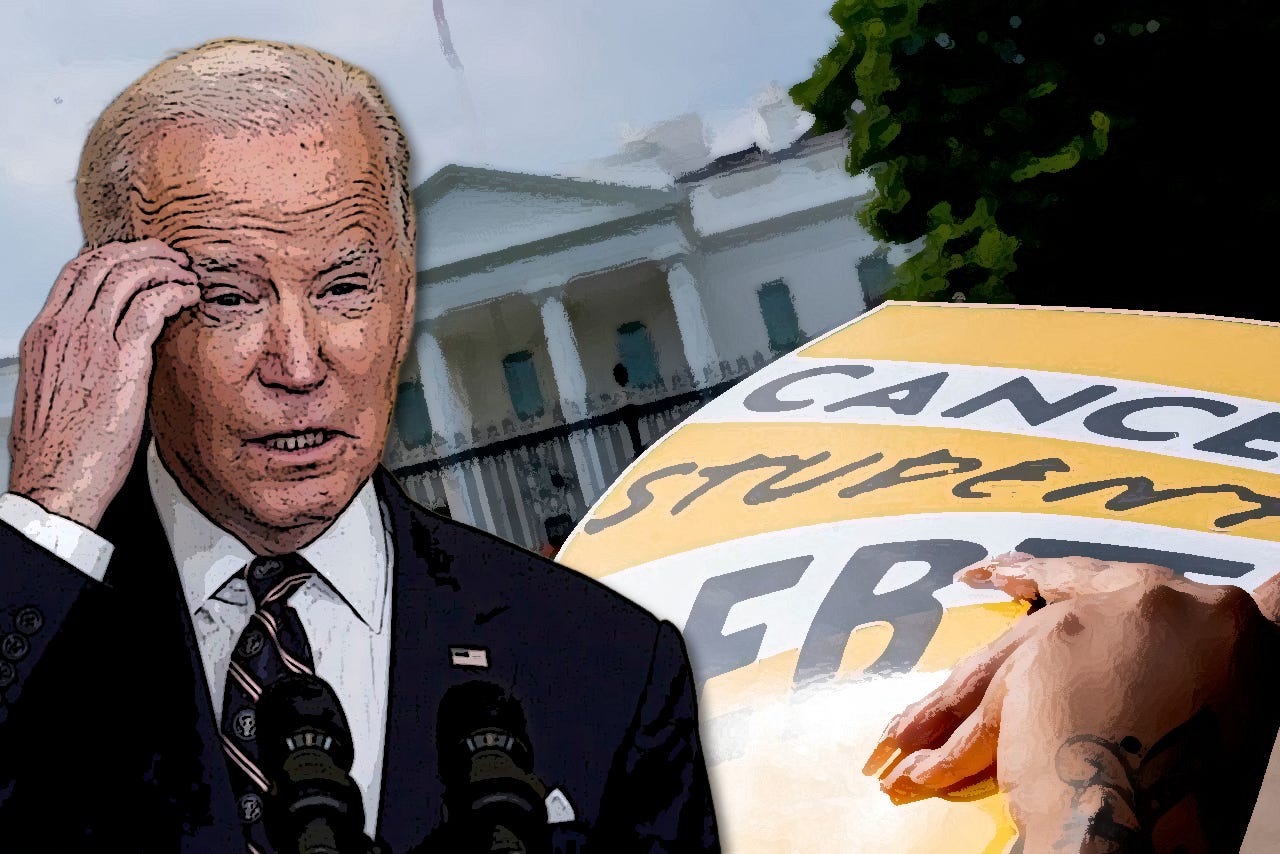
The Biden administration's latest action to cancel student loans for approximately 160,000 borrowers through a combination of existing programs – unconstitutional and illegal as it is – is a significantly disturbing and unilaterally totalitarian move in the ongoing debate surrounding student debt in the United States and the separation of powers.
The US Department of Education has announced that it will "forgive" an additional $7.7 billion in federal student loans. This brings the total amount of student debt shifted to the backs of the taxpayers by the Democrat administration to $167 billion for a privileged 5 million Americans through several programs.
Since the beginning of his administration, President Biden has been an obstinate advocate for addressing the self-inflicted student debt crisis. He stated, "I promised to fight to ensure higher education is a ticket to the middle class, not a barrier to opportunity."
The Grift
The falsehood at the core of his statement and efforts is that his plans to use taxpayer dollars to pay off unpaid student loan debt benefit the middle class. In reality, his blatant redistribution of wealth benefits the upper-middle and privileged upper classes. Households earning $97,000 or more annually carry 61% of the debt. With the 2023 national average for household income in the United States at $59,384, it's clear that Biden’s "forgiveness" programs benefit the elites to a large extent; they favor the wealthy who are able to repay their loan obligations.
Moreover, although graduate degree holders make up only 14 percent of the population over 25 years old, they account for 56 percent of the total outstanding educational debt. The main objective of obtaining a graduate degree is to maximize post-education income and employment opportunities. Therefore, individuals who earn legitimate degrees should be capable of fulfilling their loan obligations.
His efforts, however, have faced numerous legal challenges from Red state administrations, which argue that the president needs congressional approval for his overhaul of federal repayment plans and that his unilateral actions – because they are based on revenue – violate the separation of powers, encroaching on the Legislative Branch’s purview.
The latest round of loan cancellations will benefit borrowers in three categories: 54,000 borrowers enrolled in Biden's new income-driven repayment plan (SAVE Plan), 39,000 enrolled in earlier income-driven plans, and approximately 67,000 who are eligible through the Public Service Loan Forgiveness program.
The SAVE Plan offers a more expedited path to the federal money trough than previous versions, expanding the number of those grifting the taxpayers for loan cancellation after 10 years of payments, a decade sooner than in the past.
It's worth noting that despite the administration's attempts, a recent poll from the Institute of Politics at Harvard Kennedy School revealed that younger voters were not supportive of Biden's plans for student debt relief. Only 39 percent of those surveyed approved of the president's approach to this issue.
Many people have also criticized Biden’s actions as unfairly favoring wealthy college graduates at the expense of those who did not attend college and/or have already repaid their loans.
SCOTUS Has Spoken
The Supreme Court rejected President Biden's previous attempt to cancel student loans in one go, stating that it exceeded the president's authority and blurred the separation of powers in the federal government. In June 2023, the court voted to invalidate the administration's extensive student loan forgiveness program, which was estimated to create a government burden of around $800 billion or potentially over $1 trillion.
The total debt from higher education has tripled since the 2008 financial crisis. Prestigious institutions such as Harvard University, Yale University, Stanford University, and Princeton University have maintained significant endowments. In 2018, the federal government allocated around 65% of its $149 billion budget to federal student aid, including scholarships.
According to the Federal Student Aid website, 43.2 million US student loan recipients had over $1.6 trillion in outstanding loans as of the end of 2023.
The Federal Government’s
Hostile Takeover of Education Loans
The federal government started guaranteeing student loans from banks and non-profit lenders in 1965 through the creation of the Federal Family Education Loan (FFEL) program. The initial federal student loans were direct loans that were funded by the US Treasury under the National Defense Education Act of 1958.
In 1993, President Clinton suggested replacing the guarantee program with a direct approach as part of his deficit reduction plan. As a component of the 1993 budget agreement, Congress enacted the Omnibus Reconciliation Act of 1993, which gradually introduced direct lending. The process began with colleges volunteering to participate, and the Secretary of Education was given the authority, if needed, to mandate colleges to switch until at least 60 percent of loans nationwide were direct.
In 2010, President Obama signed a bill that ended a 45-year-old program. This program provided a federal subsidy to banks and other private-sector lenders, like Sallie Mae, for making government-guaranteed college loans. Obama’s supported bill shifted the responsibility for originating and collecting student loans to the federal government.
A Redistribution Of Wealth
Caleb Kruckenberg, an attorney at Pacific Legal Foundation, cautioned against student debt forgiveness measures, stating, "We have a student loan system that assumes people will repay their debt, but instead, it's become a massive government spending policy with negative effects for everyone."
Kruckenberg’s assessment is accurate. The narrative of student loan "forgiveness" is disingenuous, as all federal funds originate from taxpayer dollars. This means that any student loans not repaid by borrowing students are directly subsidized by the American taxpayer, leading to an unearned redistribution of wealth more fitting for a socialist or communist country.
President Biden's motives in student loan forgiveness, it can be argued, are steeped in political self-preservation and bribery, using taxpayer dollars to bribe 20-somethings for their votes. This pandering is the stuff of Third World politics and tin pot dictatorships,
As is often said, “there should be a law against such things.”


