

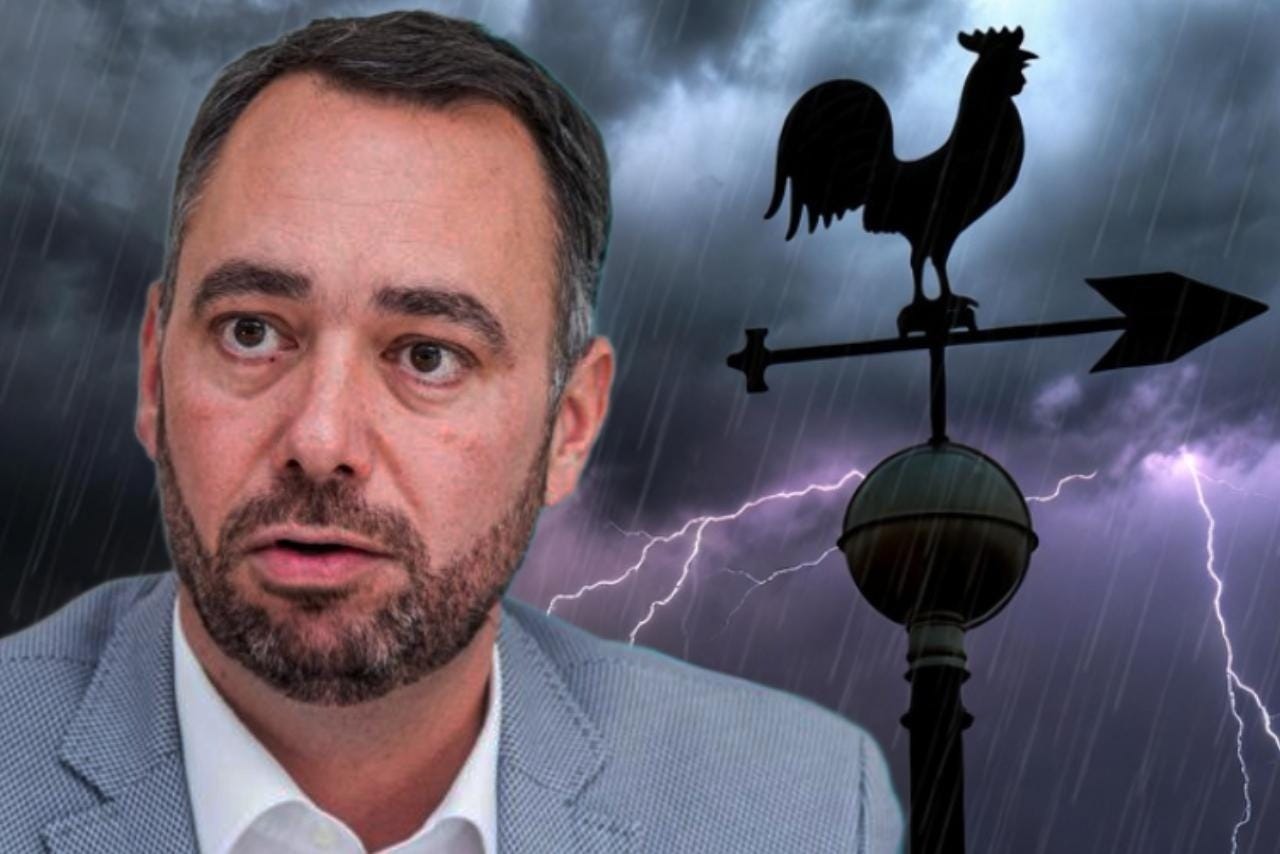
Maxime Prévot — once a small-town mayor and now, by some bureaucratic miracle, Belgium’s foreign minister — carries himself like a man convinced that the fate of nations hinges on the perfect choice of a morally neutral adjective. In his world, diplomacy consists of three neatly packaged components: a carefully worded statement, a slightly furrowed brow, and a tweet sent at carefully calibrated intervals — 8:03 a.m., 12:17 p.m., 6:42 p.m. — as though the planet itself paused to await his digital benediction between its morning coffee and evening wine. He speaks, tweets, and preens as if the performance itself were substance, as if indignation had become a legitimate tool of statecraft.
He mistakes form for function, mood for meaning, and gesture for governance. In Prévot’s Belgium, the appearance of decency substitutes for decisive power. A tone of mild concern replaces policy. Sentiment and self-regard masquerade as moral clarity. The country’s diplomacy dissolves into the soft foam of virtue-signaling, and Prévot floats serenely atop it, mistaking buoyancy for progress.
What he practices is not diplomacy but a pantomime of it — a theatrical re‑enactment staged for domestic consumption. He condemns as if condemnation alone could reorder the world, as if reproach were a diplomatic instrument. Offense has become his currency; indignation his only true policy. The man vibrates with righteous certainty, the kind that grows only in the absence of self-doubt.
This peculiar Belgian phenomenon could be called “Prévocracy.” It is not governance, nor even influence. It is an atmosphere — polite, sterile, scented faintly of overused carpet cleaner and bureaucratic tedium. In this climate, adjectives are weighty but decisions feather‑light. Every pronouncement is soaked in self-regard. Prévot does not analyze the world — he grades it like a disappointed schoolteacher. Power repels him. Strategy confuses him. Negotiation bores him. Instead, he floats blissfully in the tepid waters of moral vanity, assured that the world is morally improvable by Belgian press releases.
Ask him about the world’s trials, and he responds with the unshakable ease of a man who knows that his opinions will never cost him anything. Donald Trump is “appalling,” Israel “shameful,” the United States “worrying.” Others, as always, are guilty; he is perpetually above reproach. He stands forever on the right side — the side that requires no courage, no cost, and no results. His foreign policy is calibrated to provoke applause in the editorial rooms of his own echo chamber while the rest of the world scrolls past Belgium’s pronouncements with the same attention they give to spam emails.

What he produces is the diplomatic equivalent of flatulence in a linen dining room — fleeting, embarrassing, and ultimately ignored. And yet, utterly convinced of his gravitas, he continues to wag his moral finger at the powerful, as though the mere act of expressing disapproval imbues him with significance.
Prévot is not a statesman but a weathervane in a tailored suit. The accent of Namur thickens his English just enough to remind foreign dignitaries that they are not dealing with Talleyrand but with a man whose notion of “international experience” includes a few EU receptions and a guided tour of Strasbourg. His opinions swing with the prevailing winds of indignation — the morning headlines dictate his moral compass. Conviction is optional, visibility mandatory. Courage never precedes consensus; it feeds upon it.
Napoleon, no stranger to moral theater, once called Talleyrand “shit in a silk stocking.” That insult, merciless in its precision, was aimed at elegance concealing corruption. Prévot is a synthetic variation: not silk, not even cotton, merely polyester virtue. His tone may be polished, but beneath the gloss lies strategic emptiness. He clutches international law like a child clutching a talisman, not as a tool of engagement but as a security blanket.
In meetings, he punctuates sentences with delicate, rehearsed gestures — as though choreography could substitute for clarity. Where Washington policy‑makers weigh consequences, Brussels officials like Prévot massage their consciences. They confuse the comfort of moral posture with the hard labor of policy. Visibility becomes influence; agitation replaces action. His harmlessness is both his vice and his virtue: he changes nothing, threatens no one, and can therefore be politely ignored by everyone.
One day, the chroniclers of this foggy era will open the archives and ask what Maxime Prévot actually achieved. The answer will read like an obituary for an empty file folder: a digital forest of tweets, countless well‑phrased condemnations, and press conferences that vanished on the same breeze that carried them. He will leave behind neither scandal nor triumph — only the quiet decay of irrelevance.
It is easy to imagine his future: a comfortable posting at some marginal international forum where unsuccessful ministers are quietly recycled, condemned to repeat platitudes about human rights and sustainability to rooms full of interns checking their phones. His name may one day flash across a commemorative brochure: “Former Belgian Foreign Minister,” a title serving mostly to fill white space between sponsor logos.
And perhaps that is the most fitting fate for these ministers of moral mimicry — those who prefer posture to purpose, speech to strategy. History rarely condemns them outright. It simply forgets them. Their punishment is oblivion by neglect — the slow erosion of memory, the kind Belgium specializes in. No flames, no downfall, no villain’s exit — merely quiet ridicule and the faint scent of hand sanitizer after another inconsequential handshake.
Lifeless, empty eyes, the color of smoked herring; lips perpetually pursed in simulated depth; a beard cultivated not from conviction but from insecurity, its purpose transparently to mask a receding double chin — the aesthetic of seriousness without a single serious thought behind it. Thus stands Belgium’s foreign minister: a man inflated with moral carbon dioxide, floating in the Brussels fog, eternally alight yet utterly weightless.


