

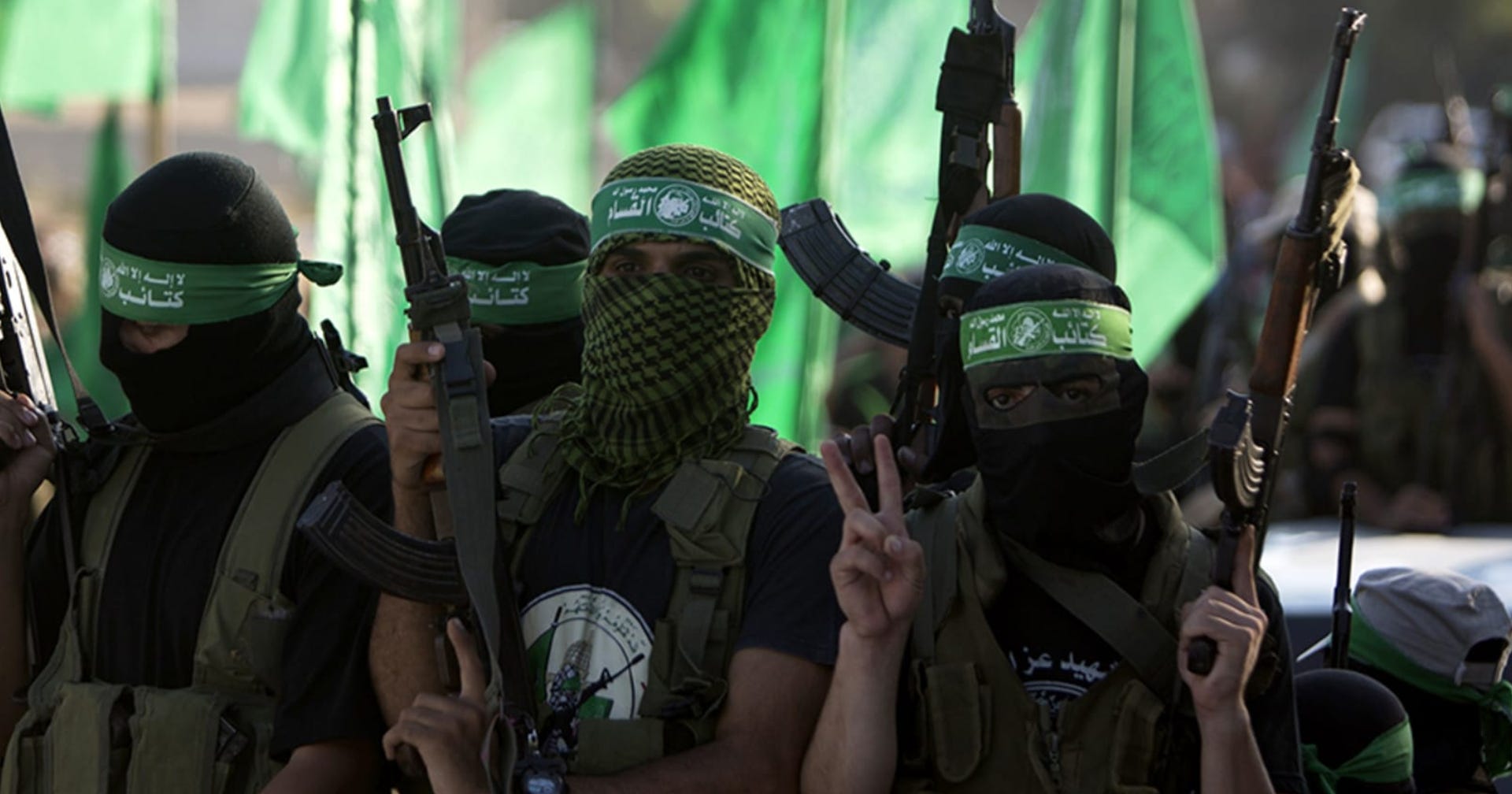
President Trump’s Board of Peace has released a 15-point roadmap for postwar Gaza that prioritizes the disarmament of Hamas and its associated militant factions. This plan, presented by the seasoned Bulgarian diplomat Nickolay Mladenov, proposes the establishment of a technocratic National Committee for the Administration of Gaza, an International Stabilization Force, a phased Israeli withdrawal, and adheres to the principle of “One Authority, One Law, One Weapon.” The goal is to create a deradicalized, terror-free zone that no longer poses a threat to its neighbors.
Trump described this effort as a monumental step forward. Israel’s ambassador to the UN expressed support for the plan in principle but emphasized the necessity of verifying actions rather than just accepting words. Hamas’s immediate reaction highlights why skepticism is a reasonable stance.
Hamas senior negotiator Ghazi Hamad described the Roadmap as “difficult and painful” and immediately began to revise its core provisions. He demands the immediate withdrawal of the Israel Defense Forces to their positions prior to the October cease-fire, a move that would give Hamas the opportunity to rearm and recruit. He also insists that any surrendered weapons be placed under the control of the Palestinian Authority rather than an international body that could render them permanently unusable.
These demands are not genuine negotiating positions; they are classic tactics used by an organization whose charter and actions demonstrate a lack of willingness to coexist with a Jewish state.
Islamofascist terror groups like Hamas are known for using hudnas to their advantage. A hudna is a temporary truce, rooted in Islamic tradition and historical practice, that allows a weaker force to pause hostilities, rebuild its strength, and resume jihad when conditions are more favorable. It is not a pathway to permanent peace; rather, it serves as a tactical timeout.
Hamas has repeatedly utilized ceasefires and temporary arrangements in this manner—accepting pauses when under military pressure, then exploiting these intervals to smuggle weapons, dig tunnels, indoctrinate a new generation of fighters, and prepare for the next round of violence. The demand for an immediate IDF pullback while maintaining control over arms fits the hudna concept perfectly. Any reconstruction effort that overlooks this pattern risks repeating the same cycle of deception and bloodshed that has characterized Gaza for decades.
Equally central to Hamas’s method is the Qur’anic tenet of al-taqiyya. Al-taqiyya is the religiously sanctioned practice of dissimulation or strategic deception when dealing with non-believers or when the faith is perceived to be under threat. It permits false statements, feigned moderation, and temporary compliance as long as the ultimate objective—the destruction of the enemy and the establishment of Islamic dominance—remains intact.
Hamas leaders have long mastered this art. They issue statements about “resistance” and “liberation” for Western audiences while maintaining an ideological commitment, openly declared in their founding documents and repeated by successive leaders, to the elimination of Israel. When Hamad and other Hamas figures speak of the Roadmap as merely “painful” rather than unacceptable, or when they offer conditional language about weapons, they are not signaling evolution. They are practicing al-taqiyya. Treating such statements as sincere is an error that has already cost thousands of Israeli and Palestinian lives.
The Board of Peace plan correctly identifies disarmament as an essential condition for achieving a stable future. Without Hamas’s complete and verifiable surrender of its arsenal, the chances for stability—and the subsequent reconstruction—are extremely slim. While international monitors and a technocratic Palestinian committee may provide aid and train police forces, they will not confront a revived Hamas that is willing to use force. Only the IDF has proven the determination and capability to prevent another incident like October 7. Any arrangement that limits Israel’s ability to act against a rearming terrorist group undermines the security that the plan aims to establish. History demonstrates that half-measures and conditional disarmament only produce temporary calm, followed by renewed conflict.
If Palestinians and Hamas genuinely desire to live in peace, they must fully disarm and participate in a civilized society. Anything less would be deceptive. This requires the unconditional surrender of rockets, tunnels, manufacturing facilities, and command structures. It cannot involve transferring those assets to another Palestinian entity that has also failed to dismantle terror infrastructure in the West Bank.
Moreover, it is essential to stop the systematic indoctrination of children in schools, mosques, and the media, which glorifies martyrdom and promotes hatred against Jews as a religious and national obligation. Decades of this toxic teaching have created a society where many view the destruction of Israel as a legitimate, even sacred, objective.
Deradicalization must not be an afterthought; it should be enforced as strictly as physical disarmament.
The Roadmap is not a peace agreement between Israel and Hamas. Hamas remains committed to Israel’s elimination. What the plan can achieve is a separation that ensures Israeli security while providing Gazans with a real alternative to ongoing conflict. Success relies on two essential elements: Israel’s right to enforce disarmament by force if necessary, and the systematic dismantling of the extremist ideology that supports Hamas. Without these components, Hamas will simply wait for the next opportunity to act. The alternative is a return to the bloodshed that has historically defined this conflict.
Reconstruction without unconditional surrender is unrealistic. Temporary ceasefires and deception are not pathways to peace; they are tools for continued jihad.
A Note About Subscribing:
At Underground USA, we pride ourselves on being fiercely independent—we only answer to our readers. This independence allows us to tackle tough questions, dive deep into important topics that often get overlooked, and share essays and podcasts, like this one, without asking for anyone’s approval.
Free subscriptions help us connect with a wider audience. They are the vehicle for the wide dissemination of the message. Paid subscriptions are what keep us going. They fund our research, document requests, interviews, fact-checking, and give us the time to dig deeper than just the headlines. Most importantly, they support something that’s getting harder to find: independent analysis that’s not swayed by advertisers, corporate sponsors, or political agendas.


