

🎧 LISTEN TO THIS ARTICLE ON THE SUBSTACK APP
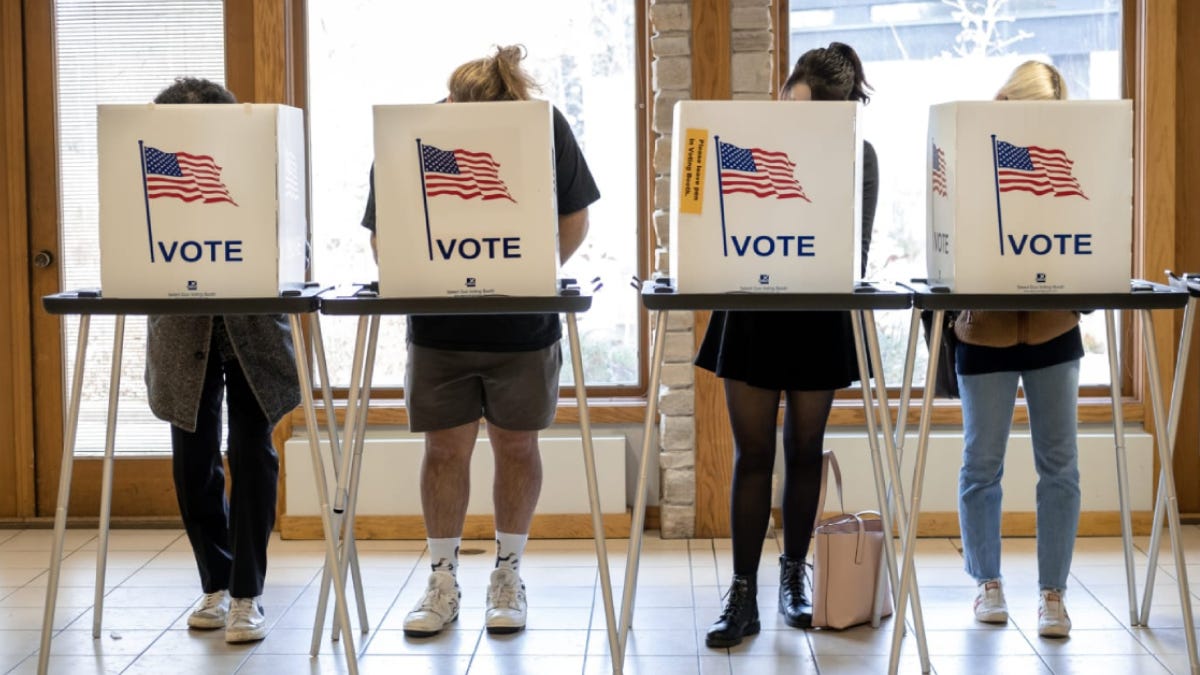
Let’s drop the fairy tale. Elections aren’t beauty contests for the purest, smartest, or most inspiring candidate on the ballot. They have never been. They are binary choices made under pressure. One person walks into the office. The other does not. In a system this large, this divided, and this consequential, the practical job of the voter is often less about elevating a saint and more about keeping the worse actor from taking and holding power.
That framing is uncomfortable for people who treat politics like a moral purity test. It’s also painfully realistic. When both options fall short of perfection—and they always do because we are human and flawed—the adult decision is to honestly assess the downside. Who will do more damage if handed the keys? Who has shown less regard for results, for competence, or for the people they claim to serve? That calculation isn’t cynicism. It’s self-defense.
Look first at candidates who refuse to explain their positions. A politician who won’t walk voters through the mechanics of a proposal—how it works, what it costs, what trade-offs it imposes, and how success will actually be measured—is asking for a blank check. That isn’t leadership. It is evasion. Voters have every right to treat that kind of silence as a warning sign. If the plan can’t survive daylight, it probably shouldn’t survive Election Day. Clarity isn’t optional for people seeking power over taxes, borders, schools, or the courts. Obscurity is a choice, and it’s rarely an innocent one.
The same warning applies to candidates who lean almost entirely on hollow, substanceless buzzwords. “Equity.” “Democracy is on the ballot.” “Our values.” “The science.” “Hate has no home here.” These phrases can sound noble until you notice they rarely arrive with definitions, metrics, trade-offs, or enforceable standards. They function as applause lines and moral shields. They let the speaker virtue signal while dodging the harder work of governing. A campaign that survives on slogans instead of plans isn’t serious about the job. It’s serious about the marketing. Voters who reward that habit should expect to get more of it.
Then there’s the party-line voter who treats the letter next to a name as sacred. “I’ve always voted Democrat.” “I’ve always voted Republican.” Habit isn’t a governing philosophy. It’s inertia dressed up as conviction. When enough people lock themselves into that posture, the parties stop competing on results and start competing on loyalty. The candidate pool shrinks. Mediocre incumbents stay safe. Reformers get crowded out before they can gain traction. Both parties suffer from this, but the effect is the same: the country ends up with a thinner, more calcified set of options. If the only filter is the team jersey, the player quality declines. Breaking that reflex is one of the few ways ordinary citizens can force better people into the arena and remind parties that votes must be earned, not inherited.

In the elections ahead—2026 and 2028—one party has made the pattern especially clear. Democrats have leaned heavily into being evasive about how their platform items would actually work in practice. Major proposals on energy, immigration, crime, and education often arrive as slogans first, with operational details coming later, if they come at all. The language stays abstract: “climate justice,” “reproductive freedom,” “protecting democracy,” “equity.” The practical questions—cost, enforcement, trade-offs, measurable outcomes—get secondary billing or none whatsoever.
At the same time, large parts of the Democrat messaging ecosystem have treated opposition itself as a form of moral contamination. Disagreement is frequently framed as bigotry, extremism, or an existential threat. That isn’t policy debate. It’s the marketing of hate as a platform plank. When one side treats half the country as illegitimate by default, the incentive to persuade disappears, and the incentive to punish grows stronger.
This isn’t a claim that Republicans are flawless or that every Republican candidate is ready for prime time. Plenty plainly aren’t. The point is narrower and more practical: in the coming cycles, the more visible pattern of concealment, buzzword-driven governance, and political demonization sits with the Democrat Party. That pattern matters more than any single personality or campaign performance.
A voter who insists on perfection will stay home or write in protest candidates and, in doing so, help the worse option. A voter who understands the actual stakes will clearly assess the relative harm and act accordingly.
None of this requires romanticizing the opposition or pretending every race is a contest between light and darkness. It requires adult judgment, critical thinking, sobriety, and the willingness to compare imperfect choices. A candidate who won’t explain the machinery of their agenda is a risk. A candidate who substitutes slogans for substance is a risk. A party that treats dissent as pathology is a risk. When those risks concentrate on one side of the ballot in a given cycle, the responsible response isn’t to wait indefinitely for an ideal alternative. It’s to deny power to the worse option.
The calendar isn’t abstract. The 2026 midterms and the 2028 presidential race will decide who controls the House, the Senate, the White House, and the administrative state that actually writes the rules. Those offices shape borders, energy costs, school curricula, criminal enforcement, and the country’s cultural temperature. Sitting them out because no candidate is pure enough is a decision with real consequences. So is reflexively checking the same party box every time. Both habits leave the field to the people most skilled at slogans and deception, and least interested in delivering results.
The urgent task is straightforward. Identify the candidates and the party whose record shows a greater reliance on secrecy, empty language, and manufactured moral panic. Then vote to keep them out. Not because the alternative is perfect, but because the alternative is still better than the alternative they offer.
If we want this country to have a fighting chance at getting better people into office, we have to stop treating elections like personal statements and start treating them like the civic responsibilities they are. If we fail at that—or worse yet, ignore it as inconsequential—we’ll keep handing power to the same entrenched class of political opportunists that created the problems in the first place.
Elections are rarely about crowning the best possible choice. They’re about keeping the worse choice out of office.
A Note About Subscribing:
At Underground USA, we pride ourselves on being fiercely independent—we only answer to our readers. This independence allows us to tackle tough questions, dive deep into important topics that often get overlooked, and share essays and podcasts, like this one, without asking for anyone’s approval.
Free subscriptions help us connect with a wider audience. They are the vehicle for the wide dissemination of the message. Paid subscriptions are what keep us going. They fund our research, document requests, interviews, fact-checking, and give us the time to dig deeper than just the headlines. Most importantly, they support something that’s getting harder to find: independent analysis that’s not swayed by advertisers, corporate sponsors, or political agendas.


