

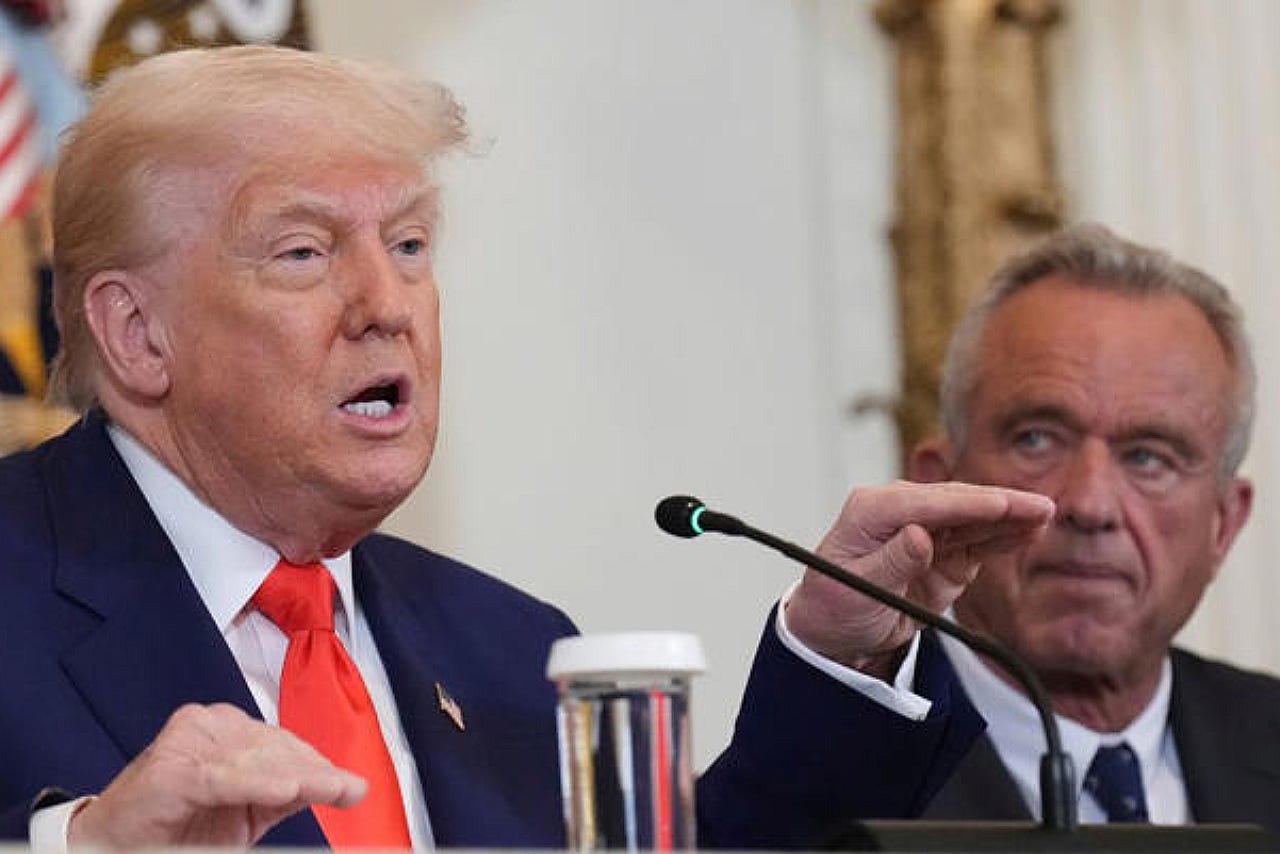
The Democrats and their leftist allies are already mobilizing their outrage over President Trump’s proposed 12.5% cut to the Department of Health and Human Services (HHS) budget. As expected, they will lament the “cruel cuts” to “essential programs,” create emotional narratives about seniors and the poor being abandoned, and accuse anyone advocating for budgetary accountability of attempting to dismantle healthcare altogether. Let’s skip the dramatics.
The reality is far simpler and far more damning: the fraud, waste, and outright fiscal malfeasance riddling Medicare, Medicaid, and the entire HHS apparatus would more than cover that cut several times over. Cleaning house wouldn’t hurt legitimate patients—it would expose how years of lax Democratic stewardship turned these programs into leaky vessels pouring taxpayer dollars into the pockets of scammers, sloppy operators, and bureaucratic dead weight. And the real prize? Redirecting those recovered billions into serious, no-holds-barred research that could actually conquer diseases instead of funding endless administrative bloat.
The numbers tell the story plainly. The FY2027 budget request eyes roughly $111.1 billion in discretionary funding for HHS, trimming about $15.8 billion—or 12.5%—from recent enacted levels. Leftist critics will howl as if every penny is sacred and perfectly spent. But look at the latest improper payment tallies from the Centers for Medicare & Medicaid Services for fiscal year 2025. Medicare Fee-for-Service alone racked up a 6.55% improper payment rate totaling $28.83 billion. Medicare Advantage added $23.67 billion at 6.09%, largely from shaky documentation backing up inflated diagnoses. Medicare Part D tossed in another $4.23 billion. Medicaid weighed in with $37.39 billion at a 6.12% rate, where the bulk—over 77%—stemmed from insufficient documentation that defenders reflexively dismiss as “not real fraud.” Across core CMS programs, that’s nearly $95.5 billion in improper payments in a single year. Factor in broader HHS waste—poor contract oversight, duplicate enrollments, eligibility errors, and administrative sprawl—and the annual drain easily climbs into the $60-100 billion range when you include schemes like upcoding and phantom services that audits often undercount.
Government watchdogs have sounded the alarm for years. The HHS Inspector General has flagged billions in overpayments for services never delivered, payments to ineligible recipients, and contracts left dangling that invite abuse. One audit alone highlighted $11.2 billion in CMS contracts at risk because basic closeout procedures were ignored. Over a decade, Medicaid improper payments have piled up into the hundreds of billions. Democrats who expanded these entitlements aggressively while skimping on ironclad safeguards own this mess. Their knee-jerk defense—”most of it’s just paperwork issues!”—rings hollow when the system can’t reliably check eligibility or medical necessity. That’s not compassionate governance; it’s fiscal negligence dressed up as empathy. Trump’s targeted cut gets covered handily by clamping down on even a fraction of this leakage. Aggressive enforcement, modern tech for verification, and real accountability could yield net savings exceeding $15.8 billion annually while actually strengthening the safety net for those who truly need it. The left’s hysteria isn’t about protecting the vulnerable—it’s about shielding a broken status quo that benefits insiders more than patients.

But the real game-changer comes when we stop merely patching leaks and start redirecting reclaimed funds. Medicare and Medicaid spending dwarfs dedicated research budgets, yet families still watch loved ones suffer from relentless diseases while bureaucrats shuffle forms. Suppose we recover a realistic $50-80 billion yearly by purging fraud, waste, and malfeasance across these programs and HHS overall. That windfall could transform the National Institutes of Health (NIH) landscape—currently funded around $48-49 billion—and launch Manhattan Project-scale assaults on terminal illnesses. Think wartime-level urgency, massive coordinated teams of scientists, accelerated trials, and resources poured in without the usual grant-by-grant nickel-and-diming. Current NIH disease funding feels incremental; this would be all-out mobilization.
For ALS (amyotrophic lateral sclerosis), a cruel disease that rapidly strips away muscle control and claims lives far too soon, dedicated federal research funding lingers in the low hundreds of millions. With reclaimed billions, we could dedicate $1 billion or more annually to a full-scale Manhattan Project effort: surging resources into gene-editing breakthroughs, neuroprotective compounds, stem cell regeneration, and nationwide clinical trial networks running in parallel. Instead of patients facing a grim prognosis with limited options, we could force timelines that deliver effective therapies or even a cure within years, not decades—ending the slow march toward paralysis and respiratory failure for thousands.
Alzheimer’s disease, which steals memories and independence from over 6 million Americans while imposing staggering caregiving costs, currently benefits from around $3.9 billion in federal research after recent modest boosts. Imagine layering on $2-3 billion more each year for a dedicated Manhattan Project: enormous investments in multi-pronged attacks on amyloid and tau proteins, inflammation pathways, early biomarker detection via advanced imaging and blood tests, and large-scale prevention studies. This level of funding could crack the code on halting or reversing cognitive decline, sparing families the heartbreak of watching parents or spouses fade away and simultaneously easing the massive burden these cases place back on Medicare and Medicaid.
Parkinson’s disease, affecting over a million Americans with tremors, stiffness, and progressive mobility loss that costs the economy tens of billions yearly, sees advocacy pushes for roughly $600 million in targeted NIH support. Redirected savings could elevate this to Manhattan Project proportions—$1 billion-plus annually—funding aggressive development of precision deep brain stimulation, alpha-synuclein-clearing therapies, regenerative cell replacements, and AI-accelerated drug screening. Patients trapped in a cycle of declining motor function could gain not just symptom management but genuine disease-halting advances, restoring independence and quality of life on a scale we’ve only dreamed about.
And for cancer, which still claims more than 600,000 American lives each year despite progress, existing NIH investments run into the billions but often feel fragmented against the disease’s complexity. An extra $5-10 billion or more yearly could ignite a true Manhattan Project for oncology: flooding the field with resources for next-generation immunotherapies, personalized genomic treatments, liquid biopsy early detection at population scale, novel combination protocols, and pediatric cancer initiatives. We could run dozens of high-stakes, simultaneous mega-trials, harness AI for rapid target identification, and push breakthroughs that turn many deadly cancers into preventable or routinely curable conditions—saving countless lives and reducing long-term treatment costs that currently feed back into the entitlement system.
Democrats will predictably clutch their pearls and insist that any efficiency drive “starves research” or “endangers lives.” That’s pure projection. The genuine barrier to cures isn’t modest budget tweaks—it’s the fiscal black hole of unchecked waste that crowds out bold innovation. Bureaucratic bloat ballooned under previous administrations, with overhead that delivers little tangible benefit to patients. Trump’s focus on rooting out malfeasance first is the adult approach: prioritize integrity, then unleash resources where they matter most. The left, having overseen the expansion without sufficient guardrails, now reveals its true colors by defending inefficiency over results.
This isn’t abstract belt-tightening. It’s about responsible stewardship of taxpayer dollars. Americans deserve healthcare programs that function efficiently, safeguard the genuinely vulnerable, and unlock transformative funding for Manhattan Project-level assaults on ALS, Alzheimer’s, Parkinson’s, cancer, and beyond. The savings exist in plain sight—billions upon billions—if we’d only muster the will to seize them instead of perpetuating the swamp.
If Democrats truly prioritized health outcomes over political theater, they’d champion the cleanup rather than obstruct it. The opportunity for real progress is right there; the only thing standing in the way is their reflexive defense of the wasteful status quo.


Frank! Preach! You know my thoughts on this. This is the most passionately written defense for broad reformation of the US Healthcare system I've EVER read ~ and it speaks to the core problem with the urgent conviction of one who's "been there." I find your article not merely analytical and informative. I find it incredibly moving ~ a personal paean to the pervasive and EVIL bureaucratic waste that wastes not just resources but actual cherished human LIVES! This is your call, your crusade ~ and I'd be honored to wage it alongside you, in memory of my own loved one who died of a gruesome, extremely rare, one-in-a-million neurodegenerative disease no one I meet on the daily has ever heard of. How, then, can we ever hope to cure or even TREAT it? For you, the murderous beast is ALS. For me, it's CJD (Creutzfeldt-Jakob Disease). For all of us, it's SINFUL bloat! For the love of God, for the love of Todd, let's lock arms and DO something about this disgraceful farce. Together, I'd wager we could even bend TRUMP's ear!
Bravo, brava!! 👏
~ Karen Hathaway Pittman 💜