

🎧 LISTEN TO THIS ARTICLE ON THE SUBSTACK APP
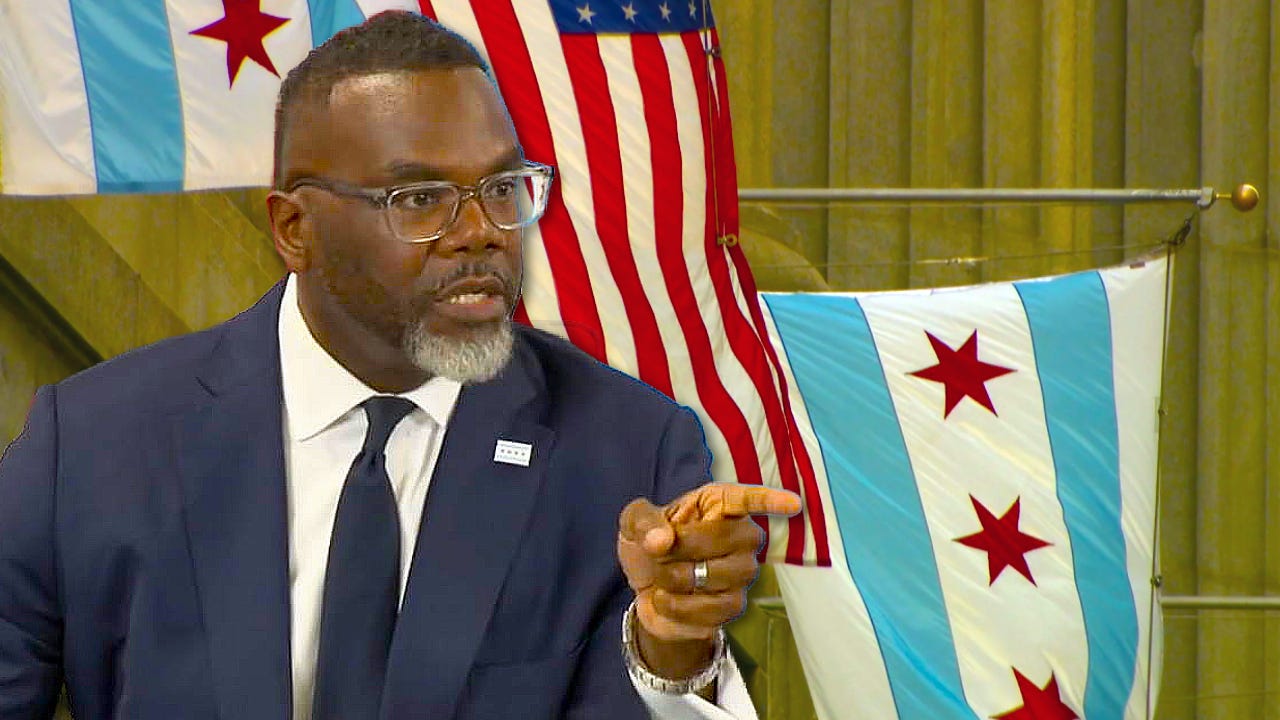
Chicago’s ethics laws (now there’s an oxymoron if there ever was one) were enacted to prevent public property, taxpayer-funded equipment and municipal employees from being commandeered for political purposes. They weren’t created to give an incumbent mayor’s government authority over the private political activities of his challengers. Yet under Mayor Brandon Johnson, a hard-Left Democrat, that boundary is being pushed aside as the machinery of city government reaches beyond its proper purview and into the political process.
The controversy involving mayoral candidate John Kelly should be understood within that broader context. The Chicago Board of Ethics is investigating Kelly following his visits to Chicago Fire Department stations. Kelly describes those visits as part of a citywide listening tour intended to give firefighters and EMS personnel an opportunity to discuss departmental conditions and the challenges they encounter while serving Chicago.
Kelly has been explicit about his purpose.
“That wasn’t a campaign video. This is part of my tour of the city of Chicago,” Kelly told WTTW’s Chicago Tonight, reiterating his commitment to visit all 96 Chicago fire stations. “We’re there as private citizens, asking them questions. We don’t distribute any kind of campaign literature. We don’t ask them for signatures.”
Kelly further explained that his objective was to hear from first responders whom City Hall has neglected.
“What we’re doing is talking to the Chicago firemen, because elected officials are not talking to them,” Kelly said. “I’m prepared to take those kinds of political hits.”
After the investigation became public, Kelly reinforced that position in an X post, describing his visits as occasions for “bringing food and talking with the Men and Women of the Chicago Fire Department.” His wife, Julie Kelly, characterized the investigation as Chicago’s purported ethics apparatus politically targeting her husband for visiting firehouses.
That characterization is difficult to dismiss. Kelly isn’t accused of coercing firefighters, demanding endorsements, distributing campaign literature, soliciting contributions, or interfering with emergency operations. His alleged offense is essentially that he entered city facilities, spoke with city employees, and made public that those conversations occurred.
Section 2-156-135 of the Chicago Governmental Ethics Ordinance prohibits candidates from intentionally using city property or municipal resources in connection with prohibited political activity. Its reasonable purpose is to stop candidates from commandeering public facilities, compelling employee participation, or manufacturing the appearance of an official departmental endorsement.
According to Kelly’s account, none of that happened. He solicited no votes, requested no endorsements, distributed no campaign literature, sought no petition signatures, coerced no city employee, and didn’t interfere with emergency operations. He listened to first responders and asked about the problems confronting their department.
Treating those conversations as ethics violations would transform a legitimate safeguard into an instrument of political control. It would extend City Hall’s authority beyond managing public resources and into regulating whom public employees may speak with, what candidates may learn, and how challengers may investigate the performance of an incumbent administration.
That is precisely where Johnson’s use of mayoral power deserves the harshest scrutiny. The incumbent already controls the public stage. Johnson can enter municipal facilities, appear alongside city employees, discuss public-safety policies, and obtain favorable exposure under the classification of “official business.” His challengers, meanwhile, can be investigated and threatened with fines of up to $20,000 per violation for entering the same facilities and speaking with the same employees.
Now, the public record hasn’t established that Johnson personally ordered the Ethics Board investigation. But that doesn’t erase the political reality. The investigation is being conducted by a government agency under his administration against an opponent seeking to remove him from office. Johnson is the beneficiary of an arrangement that gives the incumbent broad access to municipal resources while exposing challengers to governmental punishment for comparable public engagement.

Additionally, Chicago’s residency requirement for first responders makes the overreach even more objectionable. City employees, including firefighters, generally must live within Chicago. Firefighters are therefore not simply municipal workers under Johnson’s administrative control. They are Chicago residents, taxpayers, and voters directly affected by property taxes, public schools, crime, transportation, and the cost of living. They possess firsthand knowledge about response times, staffing shortages, ambulance availability, equipment needs, and neighborhood conditions.
If Johnson’s City Hall can effectively prevent candidates from speaking with firefighters at their workplaces, it effectively obstructs those firefighters’ participation in the political process. Twenty-four-hour shifts, emergency calls, mandatory overtime, and family responsibilities make it difficult—if not impossible—to attend conventional political meetings. Telling firefighters that they may speak with candidates only after removing their uniforms, leaving their stations, and taking time off preserves a rhetorical right while making it tantamount to impossible to exercise.
The appearance of a double standard becomes undeniable when viewed against Chicago’s political history. Richard M. Daley held official briefings at newly constructed police stations and modernized firehouses. Rahm Emanuel repeatedly appeared at public-safety facilities to announce equipment purchases, budgets, and crime initiatives, including during politically sensitive election periods. Lori Lightfoot and Brandon Johnson made high-profile administrative appearances involving stations during controversies over vaccination mandates, migrant housing, and public-safety policy.
Those appearances were classified as “official government business”. Legally, that label may offer protection. Politically, however, an incumbent standing at a municipal facility receives public exposure and institutional imagery that a challenger is denied. The incumbent promotes his record using the trappings of government, while his opponent risks investigation for asking employees what needs to change.
That imbalance allows Johnson to blur the boundary between governing and campaigning while demanding that his opponents observe a boundary so restrictive that it impedes basic fact-finding.
By the way, City Hall decides what qualifies as “official business”, controls access to municipal employees, and has the power to investigate those who challenge its interpretation. That isn’t ethical neutrality. It’s an expansion of executive power that inherently favors the officeholder.
Kelly’s visits don’t appear to present the kind of conduct the ordinance was intended to prevent, not by a long shot. Any enforcement by this “board of ethics” should be narrow, consistent, and applied equally. Prohibiting express advocacy, endorsements, distribution of campaign materials, employee coercion, and disruption of emergency operations would address genuine ethical dangers without forbidding ordinary conversations between candidates and public employees.
Ethics rules should protect first responders from exploitation, not isolate them from candidates. Brandon Johnson and his team shouldn’t be permitted to use the power and reach of his office to shield his administration from scrutiny, discourage challengers from gathering information, or intimidate political opponents through the threat of government punishment.
Preventing the misuse of public resources is a function of responsible government. Expanding City Hall’s authority into the private political activity of an opponent is something else entirely. It’s government power being used to protect the people who already possess it.
FOLLOW US ON X FOLLOW US ON FACEBOOK
A Note About Subscribing:
At Underground USA, we pride ourselves on being fiercely independent—we only answer to our readers. This independence allows us to tackle tough questions, dive deep into important topics that often get overlooked, and share essays and podcasts, like this one, without asking for anyone’s approval.
Free subscriptions help us connect with a wider audience. They are the vehicle for the wide dissemination of the message. Paid subscriptions are what keep us going. They fund our research, document requests, interviews, fact-checking, and give us the time to dig deeper than just the headlines. Most importantly, they support something that’s getting harder to find: independent analysis that’s not swayed by advertisers, corporate sponsors, or political agendas.


