

🎧 LISTEN TO THIS ARTICLE ON THE SUBSTACK APP
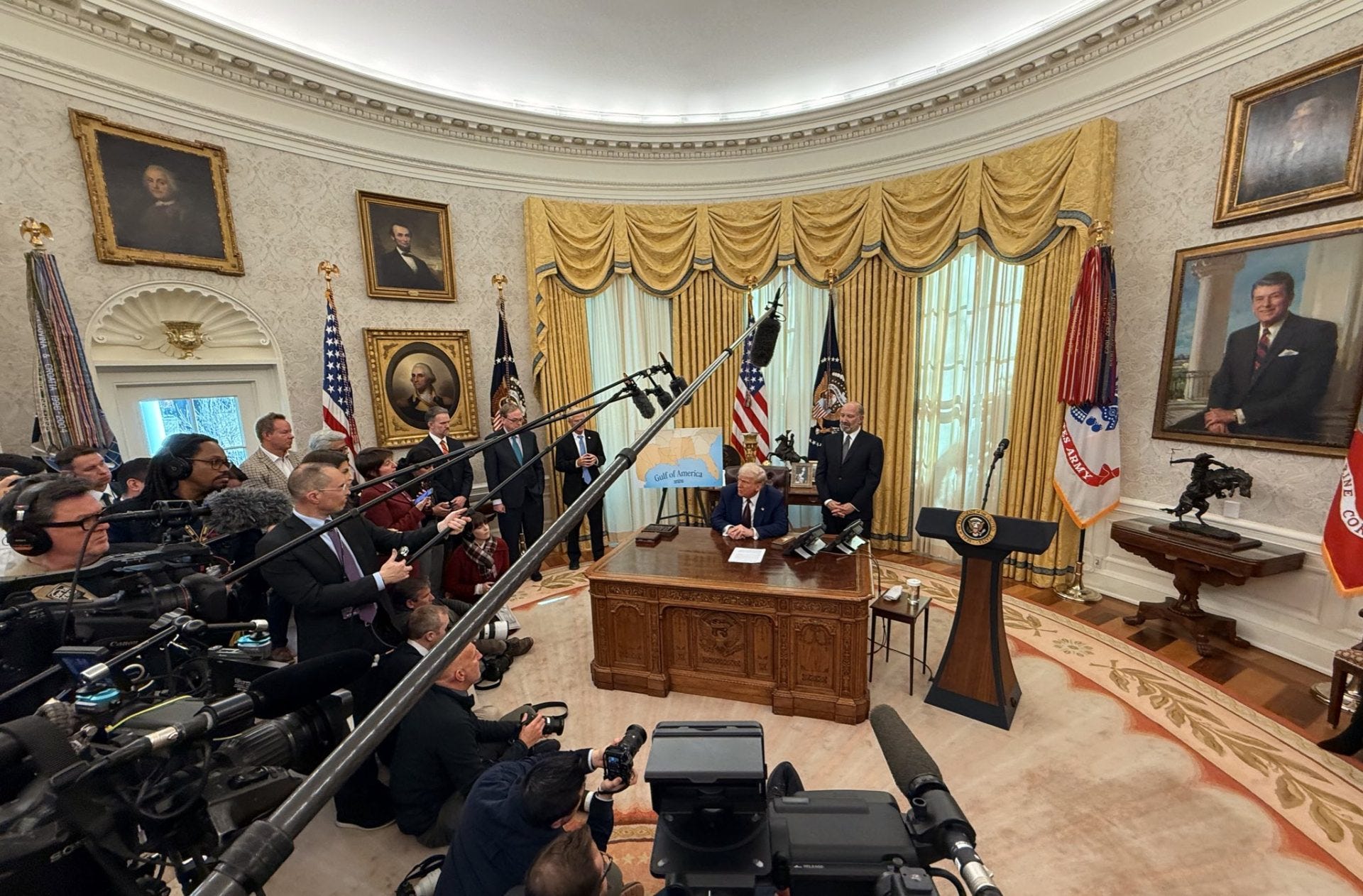
The First Amendment bars Congress from abridging freedom of the press. But it doesn’t give CNN, MS NOW, Politico, or any other outlet a constitutional right to a White House hard pass, a briefing-room seat, or entry beyond a Secret Service checkpoint. That distinction matters.
On September 24, 2026, U.S. District Judge Timothy J. Kelly, a Trump appointee, issued an eight-page temporary restraining order directing the White House to restore the outlets’ confiscated credentials for fourteen days. The outlets and their allies quickly portrayed the order as proof that their exclusion violated the First Amendment. It did not. The ruling was a preliminary decision about access and procedure, not a sweeping victory for press freedom. Treating it otherwise stretches the Free Press Clause beyond recognition.
As the Supreme Court has explained it, freedom of the press protects against prior restraint, government licensing, and punishment for publishing lawful information. It protects the right to print and broadcast; it does not guarantee access to Executive offices or to controlled briefings.
In Houchins v. KQED (1978), the Court rejected the idea that the press has a special First Amendment right to enter government institutions beyond the access available to the public. The prison-access cases Pell v. Procunier and Saxbe v. Washington Post reinforce the same point: the government may limit physical access for reasons of security, order, and administration. The White House is a working Executive compound, not a public forum. Press credentials are a matter of policy, not a constitutional entitlement.
Presidents have long treated press access as discretionary. Franklin Roosevelt favored some correspondents and shut out others. Richard Nixon restricted briefings. Barack Obama tightly managed the press pool and granted exclusives to friendly outlets. Donald Trump’s first term brought its own credential disputes; in his second, he applied the same principle more openly to organizations that had spent years treating his presidency as a target.
None of those episodes turned a briefing-room seat into a constitutional right. The press remains free to report, file Freedom of Information Act requests, cultivate sources, attend public events, and publish what it learns. What it cannot demand is that the government provide reserved access for its convenience.
Judge Kelly’s order doesn’t erase that distinction. He found that the outlets were likely to succeed on a due-process claim because they received no advance notice, no meaningful opportunity to respond, and no formally stated standards before their hard passes were confiscated on Saturday. He also rejected the administration’s national-security rationale at this stage, noting that President Trump had announced the September 18th ban because of the outlets’ “alleged lack of truthfulness and negativity.” Those findings are narrow. They concern procedural fairness and the likelihood-of-success standard used for a temporary restraining order. They do not establish that the First Amendment requires the White House to admit particular news organizations.
The Justice Department argued that access is a privilege the president may suspend, but the judge declined to accept that position at the emergency stage. A fourteen-day injunction does not rewrite Houchins.

The complaint from CNN, MS NOW, and Politico still rests on a category error: it confuses long-standing proximity to power with a legal guarantee. For decades, these organizations enjoyed daily briefings, pool sprays, travel aboard Air Force One, and the prestige of the White House Correspondents’ Dinner. Those benefits were courtesies extended by the Executive, not duties imposed by the Constitution.
When that access is withdrawn, the outlets call it censorship. But censorship would mean blocking publication, imposing a targeted tax, or empowering a government board to decide who may speak. None of that happened. The outlets remained free to criticize the administration, publish anonymous leaks, and frame policy disputes as threats to democracy. Their servers were not seized, and their audiences were not silenced.
This argument also overlooks the government’s legitimate interest in managing its own communications. An administration is not required to amplify outlets that use access as a platform for opposition research. Rules governing space, conduct, and security have always existed, and enforcing them is part of the same managerial authority exercised by previous White Houses. If the press corps believes those rules were applied unevenly, it can make that political case. But courts have traditionally hesitated to second-guess the Executive’s control over its own premises because doing so risks turning judges into assignment editors.
Recasting a due-process order as a major Free Press victory does just that. It effectively treats negative coverage as a ticket the White House must honor at the gate.
The practical problem with the media’s position is equally clear. If every credential decision becomes a constitutional lawsuit, the briefing room will become unmanageable. Hundreds of outlets could demand equal access. Security screening would be strained. The government would have to open its doors to everyone or produce detailed justifications for every exclusion, inviting endless litigation. The First Amendment was not designed to create that result. Its purpose is to prevent the government from controlling what citizens may read once information is in private hands.
Mainstream news organizations have every right to object when they are excluded. But they don’t have the right to recast that objection as a violation of the Bill of Rights, and a temporary order restoring their passes doesn’t change the underlying law.
The press remains free to publish.
What the press is not free to do is conscript the White House as an extension of its newsroom. Conflating access with press freedom doesn’t defend the First Amendment. It turns a professional privilege into a constitutional entitlement—and treats either a president’s decision to withhold that privilege or a judge’s temporary pause on procedural grounds as the final word on the Free Press Clause.
That is not constitutional principle. It is institutional self-importance dressed up as a restraining order.
A Note About Subscribing:
At Underground USA, we pride ourselves on being fiercely independent—we only answer to our readers. This independence allows us to tackle tough questions, dive deep into important topics that often get overlooked, and share essays and podcasts, like this one, without asking for anyone’s approval.
Free subscriptions help us connect with a wider audience. They are the vehicle for the wide dissemination of the message. Paid subscriptions are what keep us going. They fund our research, document requests, interviews, fact-checking, and give us the time to dig deeper than just the headlines. Most importantly, they support something that’s getting harder to find: independent analysis that’s not swayed by advertisers, corporate sponsors, or political agendas.


